Elementary Education

26 Warm-Up Activities for Elementary Students

Introduction:

Warm-up activities are integral to any lesson plan, providing an opportunity for elementary students to prepare themselves mentally and physically for learning. They can help students engage in the lesson and feel more inspired, while also breaking the ice and promoting a positive environment. Here are 26 warm-up activities suitable for elementary students:

1. Memory game: Show a picture with multiple objects and children should memorize as much as possible. Later, they should try to recall all objects.

2. Simon says: Students follow instructions given by the teacher, but only if it starts with the phrase “Simon says”.

3. Hangman: Guess letters and complete words as a team.

4. Four corners: Designate four corners of the room with numbers or themes; ask questions, and students move to their chosen answer corner.

5. Round Robin: Group students in pairs or small groups; each member shares an idea or answer in turns until everyone contributes.

6. Ball toss: Pass around a soft ball while sharing ideas, answers or facts about a topic.

7. Charades: Act out words or concepts related to the lesson, taking turns guessing them.

8. Alphabet chain: Starting with A, name an object associated with a theme, continuing sequentially.

9. Quick quiz: Answer questions related to previous lessons.

10. Puzzle race: Split into teams, have students work together to finish puzzles on their desks within a set time limit.

11. Dance-off: Play music and have quick dance breaks between topic changes.

12. Storytelling circle: Sit in a circle and create stories together, turn by turn.

13. Trivia challenge: Host a short game-show round on the class theme or subject matter.

14. Spelling relay race: Organize teams to spell out words by positioning themselves physically as each letter.

15. Freeze dance: Students dance when the music plays and freeze when it stops, incorporating movement and fun.

16. Morning stretch: Start with guided light stretching exercises to kickstart the day.

17. Class mascot: Introduce a stuffed animal as a class mascot, and ask students to say something nice to it.

18. Whiteboard race: Divide into teams and have students write answers on individual whiteboards within a given time.

19. Show-and-tell: Allow students to bring an item that represents or relates to their interests or the lesson topic.

20. Word association game: Say a word, and students must shout out associated words or concepts.

21. Imaginary trip: Plan an imaginary adventure based on a topic or theme, and let students take turns talking about what they would do.

22. Hot potato: Pass around an object while music plays; whoever is holding it when the music stops must answer a question or complete a challenge.

23. Thumbs up, thumbs down: Quickly assess understanding by having students show thumbs up for agreement or thumbs down for disagreement.

24. Math facts race: Write equations on the board and have students race to solve them as quickly as possible.

25. Silent time: Use a timer for 30 seconds where students sit quietly, meditate, or self-reflect before diving into new topics.

26. Fishbowl conversation: Create an inner circle of 4-5 students who discuss a topic while the outer circle listens silently, rotating periodically so everyone participates.

Conclusion:

Incorporating warm-up activities in elementary classrooms helps build a positive learning environment while activating critical thinking and discussion skills in children. With these 26 ideas as your resource, you can keep your lessons fresh and engaging while preparing young minds for new challenges at school.

Introducing Tic Tac Toe: A Fun and Simple Activity For Kids

Tic Tac Toe is a classic game that has stood the test of time, providing countless hours of entertainment for people of all ages. In particular, it is an excellent activity for children as it is easy to learn, fun to play, and can help improve their cognitive abilities. In this article, we will introduce you to the wonderful world of Tic Tac Toe and share the many benefits it offers for kids.

The Basics of Tic Tac Toe

At its core, Tic Tac Toe is a simple game played by two players on a 3×3 grid. One player uses an ‘X’ as their symbol while the other uses an ‘O.’ Taking turns, each player places their symbol in one of the open squares on the grid. The objective is to be the first player to place three of their symbols in a row, either horizontally, vertically, or diagonally. If all nine squares are filled without either player achieving this goal, the game is considered a draw.

Benefits of Tic Tac Toe for Children

1. Cognitive Development: As a mental exercise, Tic Tac Toe requires children to think critically and make strategic decisions. This helps develop problem-solving skills and encourages children to think ahead before making moves.

2. Social Interaction: Playing Tic Tac Toe with friends or family members fosters social interaction and helps kids learn teamwork skills, communication, and good sportsmanship.

3. Creativity: Since the game can be played with just a piece of paper and a pen or chalkboard, kids can get creative with how they set up their grids – drawing pictures and using different colors.

4. Easy Accessibility: As long as there’s space to draw a 3×3 grid, Tic Tac Toe can be played virtually anywhere – from cafe napkins to beach sand – making it an ideal choice both indoors or outdoors.

5. Unlimited Playtime: Tic Tac Toe never gets old, as each new match provides a fresh challenge for kids, keeping them engaged and entertained.

6. Builds Confidence: The simplicity of the game allows children to quickly grasp the concept and start winning games, thus improving their self-confidence.

Getting Started

Introducing Tic Tac Toe to a child is an incredibly simple process. All you’ll need is a paper and pen or a chalkboard and chalk, although there are also many downloadable templates and apps available online for easy game setup.

1. Begin by drawing a 3×3 grid with nine squares on the paper or blackboard.

2. Explain the rules and objective of the game to the child.

3. Demonstrate an example game by playing with them.

4. Let the child play several games with friends or family members to grasp the concept entirely.

In summary, Tic Tac Toe is an excellent way to introduce children to strategic thinking through a fun, timeless game that stretches their problem-solving abilities. It’s ideal for kids of all ages, as it helps build cognitive skills, encourages social interaction, and is easily accessible for hours of endless entertainment.

Becoming Involved in Forest Schools

Introduction:

As children and adults continue to spend an increasing amount of time indoors and glued to screens, the need for reconnecting with nature has never been greater. One solution that has gained significant popularity in recent years is the Forest School approach. In this article, we will explore what Forest Schools are, their benefits, and how to become involved in this transformative educational movement.

What Are Forest Schools?

Forest Schools can be traced back to Scandinavia in the 1950s but have since spread globally. They are outdoor learning environments that encourage the emotional, social, intellectual, and physical development of children and adults through a connection with nature. Activities in Forest Schools are either child-led or facilitated by trained practitioners known as Forest School leaders.

Benefits of Participating in a Forest School Program:

1. Physical Development: Engaging in activities outdoors such as climbing trees, balancing on logs, and exploring the environment helps participants build strength, balance, agility, and fine motor skills.

2. Emotional Well-being: Being in a natural setting can alleviate stress, boost mood, and promote mental health by reducing anxiety and depression symptoms.

3. Social Skills: Group activities in a non-competitive environment foster teamwork, cooperation, empathy, and shared problem-solving skills.

4. Cognitive Development: Participating in activities that involve the senses helps develop critical thinking skills and promotes curiosity about the world around us.

5. Connection with Nature: Regular exposure to nature builds an appreciation for the environment which can nurture future stewards of the Earth.

How to Become Involved in Forest Schools:

1. Locate a nearby Forest School program: Research local programs or visit the websites of international organizations like The Forest School Association (FSA) or the North American Association for Environmental Education (NAAEE) to find a Forest School near you.

2. Attend an open day or introductory workshop: Many Forest Schools host open days, taster sessions, or introductory workshops for interested families and educators to get a feel for the program.

3. Sign up for a Forest School course: If you feel that Forest School is the right fit for you, your child, or your educational setting, enroll in a course or program.

4. Become a trained Forest School Leader: If you’re an educator or parent passionate about the Forest School approach, consider undertaking training to become a certified Forest School Leader. Courses are available through various organizations such as The Forest School Association (FSA) and The Institute for Outdoor Learning (IOL).

5. Advocate for a Forest School program in your community: Raise awareness of the benefits of Forest Schools by discussing it with local educators, sharing resources, and setting up events to introduce the concept to others in your area.

Conclusion:

Becoming involved in a Forest School program has numerous benefits for the emotional, social, intellectual, and physical well-being of children and adults alike. By taking the steps outlined above, individuals can find appropriate avenues to immerse themselves in this inspiring educational movement and foster deeper connections with nature.

20 Charismatic Children’s Bible Activities

1. Bible Story Puppets: Create paper or sock puppets to represent characters from Bible stories. Have children act out the story using the puppets.

2. Scripture Memory Verse Game: Choose a memory verse and create a game to help memorize it, such as filling in blanks or matching phrases.

3. Bible Character Dress-Up: Have children dress up as their favorite Bible character and share their story with the group.

4. Bible Snack Creation: Make snacks that relate to stories in the Bible, like Noah’s ark animal crackers or Jonah’s fish-shaped sandwiches.

5. Christian Music Dance Party: Have a dance party using child-friendly Christian music, encouraging kids to move and praise God through dance.

6. Illustrated Scripture Art: Provide coloring pages or prompt kids to draw illustrations that represent selected Bible passages.

7. Sword of the Spirit Game: Create a balloon sword for each child, representing the armor of God. Encourage them to use their “swords” while reciting verses from Ephesians 6.

8. Prayer Chain Craft: Help kids construct a paper chain of prayers, where each link represents an individual prayer request or praise item.

9. Felt Board Bible Stories: Use felt cutouts to recreate favorite Bible stories on a felt board, allowing children to move the characters around as they narrate the story.

10. Creation Scavenger Hunt: Organize an outdoor scavenger hunt based on the creation story featuring items like “something beautiful” (for Day 6) or “something that lights up” (for Day 1).

11. Noah’s Ark Animal Pairs Game: Play a matching game with various animal cards and have children match the pairs of animals that entered Noah’s ark.

12. Parable Charades: Act out parables from the New Testament while other children guess the parable being presented.

13. Bible Story Yoga: Integrate yoga poses into a Bible story, helping children understand the story through movement and mindfulness.

14. Christian Songs and Hand Motions: Teach children popular Christian songs with accompanying hand motions to encourage worship and praise.

15. Proverbs Wisdom Jar: Create a jar filled with proverbs written on slips of paper. Have the children pull one out each day to discuss its meaning and application in their lives.

16. Holy Land Map Puzzle: Give kids a map of Israel during Bible times and have them put it together as a puzzle, reinforcing their knowledge of key locations in the Bible.

17. Fruit of the Spirit Poster: Design a poster for each Fruit of the Spirit (Galatians 5:22-23) to display in your children’s ministry space. Encourage kids to add images or drawings that embody each fruit’s concept.

18. Bible Emoji Stories: Use emojis or create your own drawings to represent different stories from the Bible, challenging kids to figure out which story is being represented.

19. Scripture Hopscotch: Set up hopscotch outdoors using chalk, incorporating memory verses as part of the game, requiring recitation as they hop through the course.

20. Jesus’ Miracles Science Activities: Use basic science principles to illustrate Jesus’ miracles, such as creating “walking on water” illusions or demonstrating how oil and water don’t mix – just like Jesus’ calming of the storm.

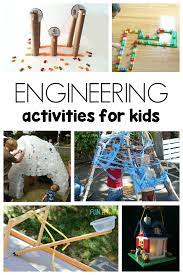
20 Fun 1st Grade Engineering Challenges For Kids To Explore – They don’t have to get dirty!

Introduction: Engineering challenges are an excellent way to introduce young children to the world of STEM (Science, Technology, Engineering, and Mathematics). With simple, hands-on, and exciting activities, kids can develop problem-solving skills and creativity. Here are 20 fun engineering challenges for 1st grade kids to explore without getting their hands dirty!

1. Build a Bridge: Using popsicle sticks and glue or tape, have kids design a bridge that can support small objects like toy cars or blocks.

2. Straw Tower Challenge: Using only straws and tape, children must build the tallest tower possible.

3. Paper Plate Marble Maze: Make a maze on a paper plate using cut out strips of paper or drinking straws and challenge kids to guide a marble through the maze.

4. Floating Cup Challenge: Task the children to keep a paper cup floating on water using only materials like foil, sticks, string, or straws.

5. Elastic Band-Powered Car: Design a car out of cardboard or foam plates that can move using only the power of rubber bands wrapped around its wheels.

6. Pasta Structures: Using uncooked pasta and marshmallows as connectors, challenge kids to create sturdy buildings and structures.

7. Balloon Rocket Blast off: Design a simple rocket out of cardboard or paper that can be propelled by inflating and releasing a balloon attached to it.

8. Foil Boat Float: Create a boat out of aluminum foil that can float on water while carrying small objects like coins or marbles.

9. Egg Drop Challenge: Design a contraption using everyday materials that protect an egg from breaking when dropped from different heights.

10. Cardboard Ramp Races: Have children design ramps made of folded cardboards for toy cars to race down.

11. Chain Reaction Dominoes: Set up a series of dominoes or similar objects that can trigger chain reactions in a Rube Goldberg-style creation.

12. Wind-Powered Vehicles: Design and build vehicles, using lightweight materials like paper or foam, that can be propelled by blowing through a straw.

13. Stable Structures: Using toothpicks and play-dough, have kids create the most stable structures they can devise.

14. String Telephone: Using empty cans or plastic cups and string, challenge them to make a working string telephone.

15. Paper Airplanes: Experiment with different paper airplane designs to find one that flies the farthest or is the most stable in flight.

16. Catapult Building: Using popsicle sticks, spoons, and rubber bands, have kids create mini catapults to launch small objects like marshmallows.

17. Sink or Float Experiment: Have children gather household items and predict whether these will sink or float in water. Then test out their predictions!

18. Simple Pulley System: Use items such as string, spools, and hooks to construct a basic pulley system for lifting light objects.

19. Cup Stacking Challenge: Have kids use plastic cups to build towers, pyramids, or other structures while experimenting with balance and stability.

20. Balance Beam Platform: Create a simple balance beam using a flat piece of wood or hardcover book and challenge children to balance it on their fingertips while placing different objects on top.

Conclusion: These 20 fun engineering challenges will help 1st grade kids explore STEM ideas while enhancing their creativity and problem-solving skills – all without getting dirty! Engaging children early on with STEM activities encourages them to develop a lifelong passion for learning about science, technology, engineering, and math concepts in a fun and accessible way.

20 Follow-On Activities For Elementary Learners

Introduction:

Elementary school learners need opportunities to engage in exciting follow-on activities after learning new concepts. These activities can help reinforce the information they’ve encountered and develop essential skills. Below are 20 creative follow-up activities designed for elementary learners in various subjects!

1. Journaling – After learning about a topic, students can write a journal entry summarizing their thoughts, ideas, and questions.

2. Mind Maps – Create mind maps to explore and visualize relationships between ideas.

3. Peer Teaching – Have students teach each other what they’ve learned through mini-lessons or presentations.

4. Book Clubs – Choose books related to the lesson’s topic and have students meet in small groups for discussion.

5. Art Projects – Encourage students to create art projects illustrating the main ideas of a lesson or concept.

6. Board Game Creation – Turn a recently learned subject into a board game, complete with rules and game pieces.

7. Debate Club – Hold a class debate on an issue related to the lesson, allowing both sides to present their arguments.

8. Field Trips – Visit local museums, parks, or historical sites that align with the topic of study.

9. Puppet Show – Assign students roles in a puppet show based on a story or concept from class.

10. Reader’s Theater – Have students act out scenes from books or stories as they read aloud.

11. Inquiry Charts – Have each student create an inquiry chart with questions and ideas related to their learning objectives.

12. Science Experiments – Encourage hands-on exploration with safe science experiments related to the topic of study.

13. Poetry Stations – Set up stations around the room where students can engage with various forms of poetry connected to the lesson.

14. Role-Playing Simulations – Act out situations related to the topic of instruction, allowing students to demonstrate problem-solving strategies in real-time.

15. Community Service Projects – Pair class lessons with opportunities to give back to the local community.

16. Pen Pals – Connect with another class learning the same material to exchange letters and share learning experiences.

17. Geocaching – Use GPS coordinates to design a geocaching adventure around school premises based on the topic of study.

18. Virtual Field Trips – Use technology to explore locations across the globe related to their learning objectives.

19. Collaborative Projects – Assign group projects in which students collaborate to create a final product demonstrating their shared understanding of a topic or concept.

20. Interactive Presentations – Develop interactive presentations using digital tools such as Prezi or Google Slides where students can engage with the material in various ways.

Conclusion:

By implementing a range of follow-on activities for elementary learners, educators can nurture curiosity, creativity, and critical thinking skills. These 20 suggestions are just a starting point; teachers should feel empowered to adapt and modify them to better suit their students’ specific needs and preferences.

20 Christmas Activities for Elementary Students

Introduction:

Christmas is a magical time, especially for children. To make this festive season more engaging and fun for elementary students, here are 20 exciting Christmas activities to try in the classroom or at home.

1.DIY Christmas Cards: Encourage students to create their own personalized Christmas cards to give to friends and family members. Provide them with colored papers, markers, stickers, and other craft materials.

2.Gingerbread House Contest: Divide the class into teams and supply each group with gingerbread house kits. Allow them to decorate their houses and judge the final designs based on creativity.

3.Christmas Tree Ornaments: Teach students how to create festive ornaments using materials like popsicle sticks, sparkly pipe cleaners, and colorful beads.

4.Write a Letter to Santa: Guide students in writing letters to Santa Claus, listing their wishes and reflecting on their good deeds throughout the year.

5.Christmas Around the World: Plan a mini library quest where students can research different holiday traditions celebrated in various countries.

6.Holiday Cookie Decorating: Bring in plain sugar cookies along with frosting, sprinkles, and edible decorations—allow the kids to have fun while making delicious treats!

7.Snowflake Art: Show students how to create unique snowflakes by folding paper and cutting different patterns.

8.Secret Santa Book Exchange: Organize a Secret Santa exchange within the class where each student brings a wrapped book as a gift for another classmate.

9.Christmas Caroling: Help students learn popular Christmas carols and perform them as a group around the school or local community center.

10.Holiday Puzzle Party: Collect holiday-themed puzzles and let students work together in teams to solve them.

11.Festive Math Activities: Incorporate holiday themes into math exercises like counting ornaments or calculating elves’ toy production rates.

12.Decorate the Classroom: Work together as a class to create a cozy and festive holiday atmosphere by decorating the classroom with lights, garlands, and handmade crafts.

13.Pantomime Games: Have the students perform pantomime acts with holiday motifs for the class to guess.

14.Christmas Story Competition: Organize a friendly writing contest where students can create their fantasy Christmas stories to read aloud in class.

15.Holiday Movie Day: Plan a relaxing classroom movie day featuring holiday classics like “Rudolph the Red-Nosed Reindeer” or “Frosty the Snowman.”

16.Winter Science Experiments: Demonstrate cool science experiments related to winter weather, like creating snowflakes with Borax or learning about insulation using mittens.

17.Reindeer Games: Organize playful reindeer-themed relay races or scavenger hunts for the kids to participate in.

18.Candy Cane Patterns: Teach students about patterns by using candy canes of different colors and sizes for hands-on practice.

19.Script and Perform a Christmas Play: Help students write a script for a Christmas play that they can perform in front of the class or for their families.

20.Create a Gratitude Jar: Encourage students to fill an empty jar throughout December with messages sharing what they are grateful for. Read these messages together as a class before winter break begins.

Final Thoughts:

These 20 Christmas activities will not only fill the season with joy and laughter but also help in developing various skills such as teamwork, creativity, and learning about different cultures—all wrapped up in holiday cheer!

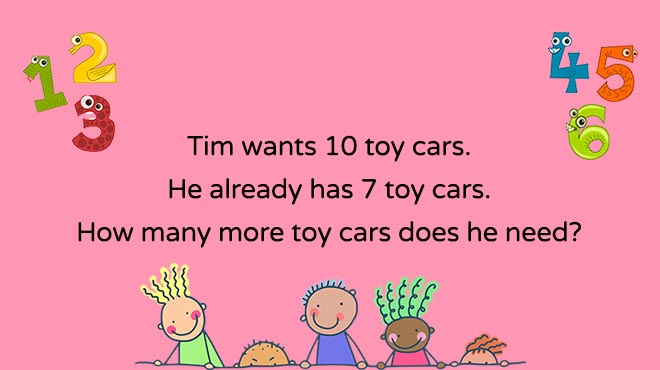
20 Challenging Word Problems for Kindergarten

Introduction:

Word problems are an essential part of early math education. They help develop children’s critical thinking and problem-solving abilities while also sharpening their language and reading skills. The following is a list of 20 challenging word problems designed for kindergarten-aged children, which parents and educators can use to ensure they build a strong foundation in mathematics.

1. Amy has four red balloons and three blue balloons. How many balloons does she have in total?

2. Billy found two seashells at the beach. His sister found five more seashells than him. How many seashells did his sister find?

3. Cindy has six candies, and she shares two of them with her friend Jenny. How many candies does Cindy have left?

4. David has a collection of ten toy cars, and he decides to give five toy cars to his friend Max. How many toy cars does David have now?

5. Emma baked seven cookies and ate three of them. How many cookies are remaining?

6. Frank planted ten flowers in his garden, but two died from lack of water. How many flowers are still in his garden?

7. Grace caught four blue butterflies and two yellow butterflies on her nature walk. How many butterflies did she catch altogether?

8. Helen visited the zoo and saw three lions, five tigers, and four bears. How many animals did Helen see in total?

9. Isaac divides twelve stickers between him and his brother equally. How many stickers does each of them get?

10. Jane finds eight shiny rocks during her outdoor adventure and then discovers two more shiny rocks later on the same trip’s possible number of shiny rocks she found.

11.If you had ten apples and gave away six apples, how many do you have left?

14.Jack received eleven cards on his birthday; three were from his friends, the rest were from family members. How many birthday cards did he receive from family members?

15. Olivia collected seven ladybugs and five grasshoppers. How many insects did she collect in total?

16. Peter had sixteen crayons, but he lost five. How many crayons does Peter have now?

17. Sophia invited four friends to her tea party, then added one more friend at the last minute. How many friends are at her tea party in total?

18. Tommy’s mother gave him fifteen candies, but eight were taken by his siblings. How many candies does Tommy have left?

19. Zoe went apple picking and collected a total of twenty apples; she picked nine green apples and the rest were red apples. How many red apples did Zoe pick?

20.A kindergarten class has ten boys and twelve girls in it; how many students are there in total?

Conclusion:

These 20 challenging word problems for kindergarten encourage creativity and logical reasoning while practicing basic mathematical concepts. Including these types of questions is an excellent way to establish a strong foundation in mathematics for young learners, providing them with the tools they need for future subjects, as well as boosting their confidence in tackling difficult scenarios independently.

22 Hands-On Digestive System Activity Ideas

Introduction:

Teaching students about the digestive system can be more fun and engaging with a variety of hands-on activities. Here are 22 creative ideas to help students grasp the inner workings of our body’s vital digestion process.

1.Edible Esophagus: Create an edible model of the esophagus using licorice pieces or gummy worms as the muscles and marshmallows for the sphincters.

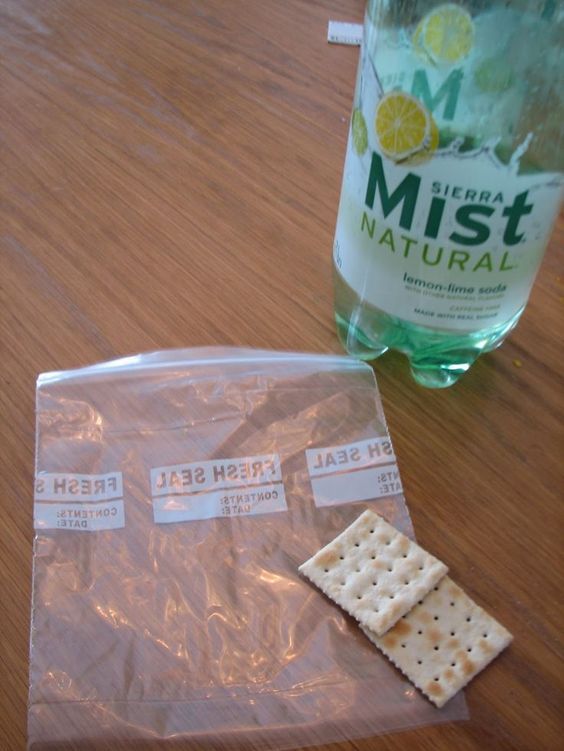
2.DIY Stomach Model: Make a model stomach using a plastic ziplock bag and add crackers and water to demonstrate how food is broken down mechanically and chemically.

3.Small Intestine Tube: Use pool noodles or long socks filled with foam beads to represent the small intestine and demonstrate peristalsis.

4.Nutrient Absorption Game: Create a board game where students use game pieces to “absorb” different types of nutrients (carbohydrates, proteins, etc.) and move around the board accordingly.

5.Anatomy Puzzle: Print out or create a large-scale puzzle of the digestive system, allowing students to piece together organs and their functions as they construct it.

6.Play-Doh Organs: Have students create their own digestive system organs out of play-doh and arrange them properly within a human body outline.

7.Digestive Process Skit: Assign roles to each student representing different parts of the digestive system, demonstrating food traveling through the body.

8.Digestive System Rap: Encourage students to write raps or songs that illustrate key concepts about the digestive system, then perform them in class.

9.Stuffed Animal Dissection: Use stuffed animals with Velcro pouches for organs, allowing students to explore anatomy in a non-graphic way.

10.Virtual Field Trip: Explore virtual tours of medical facilities or anatomy museums to see real-life examples of organs and systems functioning together.

11.Toothbrush Painting: Teach students about the importance of maintaining good oral health through a fun and creative toothbrush painting activity.

12.Digestion Relay Race: Organize a relay race with tasks, such as chewing marshmallows, moving marbles using plastic tubings, and more to demonstrate various aspects of digestion.

13.Indoor Scavenger Hunt: Hide cutouts of the digestive system organs throughout your classroom for an educational scavenger hunt.

14.”What Am I?” Game: Have students write descriptions or riddles about different parts of the digestive system, and let others guess what part they are describing.

15.Comparing Digestive Systems: Research and compare the digestive systems of animals, discussing similarities and differences with respect to human anatomy.

16.Food Enzyme Simulation: Assign different foods to students along with their enzyme counterparts, demonstrating how enzymes break down specific nutrients.

17.Digestive System Trivia: Host a trivia game to challenge students’ knowledge on digestion-related facts and figures.

18.Stomach Balloon Experiment: Fill up balloons to simulate stomach expansion during a meal or after consuming gas-producing food items.

19.Microbiome Terrarium: Create terrariums showcasing how gut bacteria thrives in specific conditions, explaining its role in digestion and overall health.

20.Coloring Book Pages: Provide coloring pages that depict each organ within the digestive system, encouraging artistic learning alongside memorization.

21.Hands-On Jeopardy: Create a Jeopardy-style game involving physically manipulating organ models or other props related to digestion when answering questions correctly.

22.Personalized Digestive Track Poster: Ask each student to research their favorite animal’s digestive track and create a poster presenting unique features they discovered when compared to human anatomy.

Conclusion:

These hands-on activities will keep your students engaged while providing them with valuable activities.

30 Fun Activities For Busy 10-Year-Olds

Engaging in activities with your children can be quite exciting, and this article aims to provide you with a list of 30 fun activities to keep your busy 10-year-olds entertained. These activities are perfect for helping them develop essential skills, stay active, and create lasting memories.

1. Cooking Together: Teach your child how to prepare simple dishes and encourage them to help out in the kitchen.

2. Painting: Let your child’s creativity flow through painting on canvas, paper, or even rocks.

3. Origami: Learn the art of paper folding together and create beautiful designs.

4. Crafting: Provide supplies for your child to make their own crafts, such as jewelry or decorations.

5. Gardening: Teach them about planting seeds, watering plants, and harvesting vegetables.

6. Reading Club: Start a reading club with friends or family members and discuss your favorite books.

7. Board Games Night: Set aside an evening for playing classic board games like Monopoly or Scrabble.

8. Scavenger Hunt: Organize a scavenger hunt outdoors with clues hidden around the neighborhood or park.

9. DIY Science Experiments: Conduct safe science experiments at home to satisfy their curiosity about the world around them.

10. Biking: Take bike rides together and explore your local area.

11. Hiking: Find nearby nature trails and spend time outdoors.

12. Sports Clinic/Classes: Encourage your child to join a sports clinic or class at a nearby facility or community center.

13. Dance Party: Turn on some music and have a fun family dance party in the living room.

14. Movie Night: Transform your living room into a movie theater with popcorn, blankets, and pillows watching all-time favorite movies.

15. Swimming Pool Fun: Spend an afternoon splashing around at the local swimming pool together.

16. Camping Trip: Plan a weekend getaway and camp out in a local or state park.

17. Visit Museums: Explore art, science, or history museums for a day of learning and discovery.

18. Puzzle Solving: Encourage your child to solve crosswords, Sudoku puzzles, or mind-challenging riddles.

19. Karaoke Night: Sing along with your favorite songs at home or at a karaoke place.

20. Volunteering: Teach them the importance of giving back by volunteering at a local charity or shelter.

21. DIY Jewelry: Create homemade bracelets, necklaces, or earrings using beads and various materials.

22. Storytime: Write stories together and take turns reading them out loud.

23. Family Fitness Challenge: Challenge each other to daily exercises and keep track of progress.

24. Photography Walk: Take a walk together, capturing photographs of nature and cityscapes around you.

25. Homemade Puppet Show: Craft simple puppets using socks or paper bags and stage a puppet show.

26. Sports Day: Organize a family sports day with various games like soccer, basketball, or relay races.

27. Pottery/Painting Class: Sign up for a pottery or painting class together at a local community center.

28. Picnic in the Park: Pack your favorite foods and blankets for a fun picnic outing at the nearby park.

29. Talent Show: Encourage your child to discover their talents and showcase them in a family talent show.

30. Family Bike Ride/Adventure: Plan an adventurous bike ride with picnic stops along the way to explore new sights together.

These activities will help keep busy 10-year-olds entertained while ensuring they develop essential skills like social interactions, teamwork, critical thinking, creativity, problem-solving, physical fitness, and more. These shared experiences will create lasting memories that both you and your child.