Elementary Education

25 Beneficial Math Activities For Preschool

Introduction:

Preschool is the perfect time to introduce and nurture a child’s love for math. Engaging math activities can help young children develop a strong foundation in mathematics and build their critical thinking skills. Here are 25 beneficial math activities that will make learning fun and enjoyable for preschoolers.

1. Counting Objects: Use everyday objects like toys, fruits, or buttons, and ask your child to count them.

2. Number Puzzles: Give your child a number puzzle that helps them recognize numbers and their sequence.

3. Sorting by Size: Encourage your child to sort items like blocks or leaves by their size.

4. Shape Matching: Create or purchase a set of different shapes and ask your child to find matches.

5. Finger Painting Numbers: Allow your child to practice writing numbers with finger paint.

6. Number Songs: Use songs and nursery rhymes involving counting and numbers for fun musical learning experiences.

7. Measuring Fun: Introduce simple measuring tools like rulers or tape measures, and show them how to measure various objects.

8. Connect the Dots: Create dot-to-dot worksheets that teach number sequencing and improve fine motor skills.

9. Pattern Play: Use items like beads, buttons, or cereal to create patterns, then encourage your preschooler to replicate or extend those patterns.

10. Baking Math: Teach basic addition and subtraction through simple baking recipes, measuring ingredients together.

11. Number Hunt: Hide objects with numbers on them around the house or classroom for a fun treasure hunt.

12. Tally Marks: Show your child how to represent numbers using tally marks on a piece of paper.

13. Skip Counting Games: Play games that involve counting by twos, fives, or tens.

14. Chalk Numbers: Write numbers outdoors with chalk and have your child trace over them with their finger or a wet brush.

15. Play Money: Introduce the concept of money by using play coins and bills for learning addition and subtraction.

16. Lego Math: Use building blocks to teach concepts like counting, adding, and subtracting.

17. Dice Games: Play simple dice games (e.g., Yahtzee) involving addition and number recognition.

18. Time Telling: Demonstrate how a clock works, helping them learn the concepts of hours and minutes.

19. Calendar Activities: Teach days of the week, months of the year, and seasons using a wall calendar.

20. Fraction Fun: Show your child how to divide a pizza or piece of fruit into various fractions (e.g., halves or quarters).

21. Estimation Jars: Fill a jar with small items (e.g., marbles or cotton balls) and have your child guess the number inside.

22. Geoboard Creations: Use a geoboard and rubber bands to create shapes and explore geometry concepts.

23. Tangrams: Challenge your preschooler with tangram puzzles to improve their problem-solving skills.

24. Ten-Frame Activities: Teach your child how to represent numbers using ten-frame cards and manipulatives.

25. Math Picture Books: Read age-appropriate math picture books that incorporate math concepts in a fun, engaging story format.

Conclusion:

These 25 beneficial math activities for preschool can spark your child’s curiosity and provide hands-on learning experiences that build a strong foundation in mathematics. Mix things up by incorporating different activities to keep things fresh and engaging while fostering a love for math in your little one.

20 Perfect Peter Rabbit Activities Kids Will Enjoy

Introduction:

Peter Rabbit, the classic character created by Beatrix Potter, has been a beloved figure in children’s literature for generations. Keeping the enchanting world of this mischievous and lovable rabbit alive, we’ve put together a list of 20 perfect Peter Rabbit activities that kids will absolutely enjoy.

1. Peter Rabbit Storytelling: Read the original stories or watch the animated series together with your children to introduce them to Peter Rabbit and his friends.

2. Make Bunny Ears: Create simple bunny ears using a headband, pipe cleaners, and felt to wear while enjoying these activities.

3. Peter Rabbit Coloring Pages: Print out coloring pages featuring Peter Rabbit and his adventures for your kids to color.

4. Bunny Hop Race: Set up a backyard race where kids can hop like rabbits while holding a soft toy between their knees.

5. Carrot Treasure Hunt: Hide carrot-shaped treats or small toys around your home or garden for kids to find.

6. Plant a Garden: Teach your kids about gardening by planting their own mini vegetable or flower garden inspired by Mr. McGregor’s garden.

7. Create Peter Rabbit Puppets: Use paper bags, construction paper, or felt to make puppets of Peter Rabbit and his friends for imaginative playtime!

8. Bake Bunny-Shaped Cookies: Make sugar cookies in the shape of bunnies and decorate them with icing and edible decorations.

9. DIY Bunny Slippers: Craft cute bunny slippers using old socks, fabric, and non-toxic glue.

10. Watch the Peter Rabbit Movie: Enjoy the live-action/animated adaptation of the beloved character with your family.

11. Pin The Tail on The Bunny: Play this classic party game using a printed or crafted rabbit image.

12. Paint Pottery Rabbits: Visit a local pottery studio and paint rabbit figurines – or create your own using air-dry clay.

13. Jemima Puddle-Duck Origami: Make origami ducks inspired by the character of Jemima Puddle-Duck.

14. Write Your Own Peter Rabbit Story: Encourage kids to create their own Peter Rabbit-inspired tale, complete with illustrations!

15. Make a Bunny Mask: Using paper plates, markers, and craft supplies, create bunny masks for kids to wear.

16. Play Rabbit-Themed Charades: Act out different rabbit-themed words and phrases for a fun family game night.

17. Attend a Peter Rabbit Party or Event: Check your local community for Peter Rabbit-themed events or parties to attend with your little ones.

18. Visit a Local Bunny Farm or Petting Zoo: Go on a family outing to interact with real rabbits and learn more about these adorable animals!

19. Create a Peter Rabbit Sensory Bin: Using items like fake grass, play carrots, and plastic rabbits, create a sensory bin for kids to explore.

20. Make Carrot Top Music Shakers: Turn empty plastic bottles and carrot tops into whimsical music shakers by adding dried beans or rice inside them.

Whether it’s getting creative with arts and crafts or exploring nature through gardening, these 20 perfect Peter Rabbit activities will keep kids entertained while fostering their love for the iconic character.

23 of Our Favorite Fishing Books for Kids

Fishing is not just a sport; it’s a timeless tradition and an opportunity for kids to learn about life, nature, and patience. Sharing stories centered around fishing can be a great way to bond with your young ones, whether they’re seasoned anglers or new to the world of rods and reels. We’ve compiled a list of 23 fantastic fishing books for kids that’ll make their imaginations reel!

1. “The Berenstain Bears Gone Fishin'” by Mike Berenstain

2. “Little Critter: Just Fishing with Grandma” by Mercer Mayer

3. “Pout-Pout Fish” by Deborah Diesen

4. “Hooray for Fish!” by Lucy Cousins

5. “Where’s the Fish?” by Taro Gomi

6. “The Tale of Mr. Jeremy Fisher” by Beatrix Potter

7. “The Rainbow Fish” by Marcus Pfister

8. “A Different Pond” by Bao Phi

9. “Gone Fishing: A Novel in Verse” by Tamera Will Wissinger

10. “Biggest Littlest Fish” by Margaret Wise Brown

11. “);Nim’s Island”}}” Nim\\\\\\\\\\\\\\\’s Island\\”oinvir;!111!!

12. “Net of Stars: A Fishing Tale” by Jennifer Torres

13. “Sardines of Love” by Zuriñe Aguirre

14. “Swimmy” by Leo Lionni

15. “The Fish and the Cat: A Fable” by Marianne Dubuc

16. “Fish Boy: An Inuit Tale” retold by David Seveigny and Allan Wolverton.

17. “Fly Fishing Brothers: A Fun Adventure Story for Kids!” by Ace Collins and Marty Bates.

18. Harry’s Fly-Fishing Adventure\17. “Harry’s Fly-fishing Adventure” by Wynne McLaughlin and Pamela Duck.

19. “Fishing Adventure” by Marina Adair

20. “Derek Takes His Dad Fishing” by Stephen Lavery and Chevonne O’Shaughnessy

21. “The Little Boy Who Wanted to Fish” by W.O. Mitchell

22. “I Spy a Rainbow Trout!: A Fishing Rhyme Story” by Karen Denise Cox.

23. “Curious George Goes Fishing” by H.A. Rey

These fishing books for kids are sure to entertain and inspire an appreciation of the great outdoors! Their life lessons, captivating illustrations, and memorable adventures will stay with your children long after they’ve closed the pages. From fictional tales to relatable stories of learning to fish, these books can be enjoyed by young anglers and bookworms alike, helping to create cherished memories that last a lifetime. So grab one (or all) of these captivating reads, cast out your line, and dive into a world of fishing adventures!

42 Kindness Activities for Elementary Students

Introduction:

Teaching kindness to elementary students offers numerous benefits, including fostering empathy, building strong relationships, and enhancing overall well-being. Here are 42 kindness activities that can be easily incorporated into your classroom routine or adapted for use at home.

1. Random Acts of Kindness Calendar

2. Compliment Jar

3. Kindness Bingo

4. Gratitude Journaling

5. Smile Cards

6. Friendship Bracelets

7. Helping Hands Bulletin Board

8. Thankful Thursdays

9. Kindness Skits & Roleplays

10. Create a Classroom Kindness Pledge

11. Mindful Listening Practice

12. Encouraging Notes in Lunchboxes

13. Care Packages for the Homeless

14. Volunteer at a Local Non-profit

15. Collect and Donate Supplies to Classrooms in Need

16. Reading Buddies Program

17. Appreciation Station

18. Honor Teachers and Staff with Special Recognition

19. Acts of Service Project Ideas

20. Start a Kindness Club

21. Kindness Bookmarks with Inspirational Quotes

22. Write Letters to Senior Citizens

23. Cultivate a Classroom Garden

24. Create Get Well Cards for Hospitalized Children

25. Hold a Fundraiser for an Important Cause

26. Starting a Toy/Book Drive for those less fortunate

27. Identify Everyday Heroes (Local workers, community members)

28. Spread Positivity through Chalk Art Messages

29. Animals and Kindness: Learning about animal shelters and ways to support them

30. Portraits of Gratitude: Art activity where students draw people they appreciate

31. Kind Hands- “LEAF” no one behind: Students write acts of kindness on paper leaves and create a kindness tree

32. Create Flowers with Kindness Petals (paper flower with kind words written on petals)

33. Clean Up Your Neighborhood: Organize a neighborhood clean-up day

34. Thankful Stones- Paint rocks with kind messages and hide them around school/community

35. Peer Recognition Certificates for Acts of Kindness

36. Buddy Bench: Install a buddy bench to encourage friendship and inclusion during recess

37. Learn About and Share Inspirational Stories of Kindness

38. Support Our Troops: Write letters or make care packages for soldiers overseas

39. Kindness Mad Libs: Fun activity that emphasizes positive words and phrases

40. Thank You Letter Writing Campaign (to family, friends, community helpers)

41. Pay it Forward Day: Encourage students to complete an act of kindness for someone and challenge them to pass it on

42. Wear Kindness-themed T-shirts or create your own designs promoting kindness

Conclusion:

Incorporating these 42 kindness activities into your classroom or at home will help build a strong foundation of empathy, compassion, and positive relationships in your students’ lives. Practice these acts of kindness regularly to continue nurturing an environment where kindness is ingrained in the hearts and minds of our youth.

Pick of the Week: Robot Turtles – A Fun and Educational Board Game

As technology continues to advance, it is becoming increasingly crucial for individuals to develop strong problem-solving and critical thinking skills. One innovative way to introduce these abilities to younger generations is through engaging and educational board games, such as the Pick of the Week: Robot Turtles.

Created by software entrepreneur Dan Shapiro, Robot Turtles combines elements of programming and logic into an entertaining game play experience. Designed for children as young as four years old, this board game provides an enjoyable way for kids to learn the basics of coding principles while developing their ability to strategize.

In Robot Turtles, players assume the role of turtle masters tasked with guiding their respective turtles through various mazes by using a series of color-coded cards that represent basic code functions. The objective is to collect hidden gems scattered throughout the maze while avoiding any obstacles or barriers.

The game consists of four turtle tokens, one for each player; a set of color-coded cards representing movement instructions, including forward, left turn, right turn, and “bug” (to undo the last move); a game board with a customizable maze featuring walls and ice tiles; and gem tokens placed at strategic points within the maze.

Robot Turtles encourages players to think ahead and plan their moves in order to navigate through challenging mazes successfully. As children progress through multiple levels of gameplay, they become more adept at understanding programming concepts such as sequences, loops, conditionals, and debugging techniques. In addition to honing players’ cognitive skills, Robot Turtles also fosters collaboration by enabling players to work together and assist one another when programming their turtles.

Furthermore, this game serves as a unique opportunity for parents to connect with their children in an educational setting. Many young learners find traditional classroom environments intimidating or dull; however, Robot Turtles allows them to explore complex concepts like coding in a relaxed atmosphere that fosters creativity, communication, and enthusiasm for learning.

In conclusion, Robot Turtles stands out as not just the Pick of the Week, but also a fantastic tool to familiarize children with coding concepts in an engaging and enjoyable manner. This cleverly designed board game combines entertainment with education, making it an excellent option for parents seeking ways to introduce their children to the ever-evolving world of technology.

35 of the Most Beautifully Illustrated Children’s Books of All Time

Introduction:

Since the first children’s books came into existence, the combination of enchanting stories and stunning illustrations has captured the hearts of both children and adults alike. With a world of imaginary characters and landscapes at their disposal, illustrators have always been eager to create breathtaking visuals that bring a story to life. In this article, we will be exploring 35 of the most beautifully illustrated children’s books that have stood the test of time. So, without further ado, let’s dive into the world of magical artistry!

1. Where the Wild Things Are by Maurice Sendak (1963)

2. The Very Hungry Caterpillar by Eric Carle (1969)

3. Madeline by Ludwig Bemelmans (1939)

4. The Tiger Who Came to Tea by Judith Kerr (1968)

5. The Tale of Peter Rabbit by Beatrix Potter (1902)

6. The Gruffalo by Julia Donaldson and Axel Scheffler (1999)

7. The Snowman by Raymond Briggs (1978)

8. Goodnight Moon by Margaret Wise Brown and Clement Hurd (1947)

9. The Polar Express by Chris Van Allsburg (1985)

10. Title Little Prince by Antoine de Saint-Exupéry (1943)

11. Harold and the Purple Crayon by Crockett Johnson (1955)

12. Winnie-the-Pooh by A.A Milne and E.H Shepard (1926)

13. The Giving Tree by Shel Silverstein (1964)

14. Coroline by Neil Gaiman and Dave McKean (2002)

15. The Wonderful Wizard of Oz by L. Frank Baum and W.W Denslow (1900)

16. Oh, The Places You’ll Go! By Dr.Seuss(1990)

17. The Journey by Aaron Becker (2013)

18. Alice’s Adventures in Wonderland by Lewis Carroll and John Tenniel (1865)

19. The Secret Garden by Frances Hodgson Burnett and Tasha Tudor (1911)

20. Peter Pan by J.M. Barrie and F.D. Bedford (1911)

21. The Little Engine That Could by Watty Piper and George and Doris Hauman(1930)

22. Guess How Much I Love You by Sam McBratney and Anita Jeram (1994)

23. Animals of Farthing Wood by Colin Dann and Jacqueline Tettmar (1979)

24. Green Eggs and Ham by Dr.Seuss(1960)

25. Circle, Square, Moose by Kelly Bingham and Paul O. Zelinsky (2014)

26. A Sick Day for Amos McGee by Philip C. Stead and Erin E. Stead(2010)

27. Beekle: The Unimaginary Friend by Dan Santat (2014)

28. The Last Stop on Market Street By Matt de la Peña illustrated by Christian Robinson(2015)

29. This Is Not My Hat by Jon Klassen(2012)

30. Jumanji By Chris Van Allsburg(1981)

31. Janet Ahlberg’s Each Peach Pear Plum

32. Richard Scarry’s Busy, Busy Town

33. Charlotte’s Web – E.B White & Garth Williams(1952)

34. Room on the Broom – Julia Donaldson and Axel Scheffler

35. The Wind in the Willows – Kenneth Grahame & E.H. Shepard

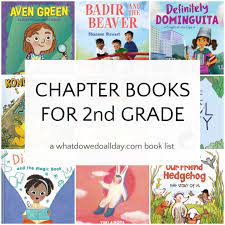
55 of Our Favorite Chapter Books for 2nd Grader Readers

Introduction:

As children transition from early readers to more confident readers, second grade provides the perfect opportunity for them to explore a wide range of chapter books. This list of 55 favorites is designed to engage, inspire, and delight your young reader. These books offer exciting narratives, unforgettable characters, and important life lessons that are perfect for second-grade students.

1. Charlotte’s Web by E.B. White

2. The Magic Tree House Series by Mary Pope Osborne

3. The Boxcar Children Series by Gertrude Chandler Warner

4. Ramona Quimby, Age 8 by Beverly Cleary

5. Junie B. Jones Series by Barbara Park

6. Diary of a Wimpy Kid Series by Jeff Kinney

7. My Father’s Dragon Series by Ruth Stiles Gannett

8. The Lemonade War Series by Jacqueline Davies

9. Little House on the Prairie Series by Laura Ingalls Wilder

10. The Chocolate Touch by Patrick Skene Catling

11. Nate the Great Series by Marjorie Weinman Sharmat

12. Ivy and Bean Series by Annie Barrows

13. Cam Jansen and the Mystery series by David A. Adler

14. The Miraculous Journey of Edward Tulane by Kate DiCamillo

15. The Littles Series by John Peterson

16. Henry Huggins Series by Beverly Cleary

17. Pippi Longstocking Series by Astrid Lindgren

18. Judy Moody Series by Megan McDonald

19. Sideways Stories from Wayside School Series by Louis Sachar

20. Bink and Gollie series by Kate DiCamillo and Alison McGhee

21. Stink series by Megan McDonald

22. Poppleton Series Cynthia Rylant

23. Clementine series by Sara Pennypacker

24. Frindle by Andrew Clements

25. Balto of the Blue Dawn by Mary Pope Osborne

26. Time Cat by Lloyd Alexander

27. The Stories Julian Tells by Ann Cameron

28. Bunnicula Series by James Howe

29. A to Z Mysteries Series by Ron Roy

30. Dinosaurs Before Darkby Mary Pope Osborne

31. Magic School Bus Chapter Book Series by Joanna Cole

32. Gooney Bird Greene Series Lois Lowry

33. Horrible Harry series by Suzy Kline

34. Sarah, Plain and Tall Patricia MacLachlan

35. Fantastic Mr. Fox Roald Dahl

36. The Mouse and the Motorcycleby Beverly Cleary

37. Amber Brown series Paula Danziger

38. The Borrowers series Mary Norton

39. Mr. Popper’s Penguins Richard Atwater and Florence Atwater

40. The Lump of Coal Lemony Snicket

41.  Black Lagoon Adventures series Mike Thaler

42. The One and Only Ivan Katherine Applegate

43. Tales of a Fourth Grade Nothing Judy Blume

44. Lola Levine series Monica Brown

45. Dog Man series Dav Pilkey

46. Mercy Watson series Kate DiCamillo

47. Encyclopedia Brown series Donald J. Sobol

48. The Hundred Dresses Eleanor Estes

49. Sofia Martinez Jacqueline Jules

50. Fantastic Frame series Lin Oliver

51. Invisible Inkling Emily Jenkins

52. Socks by Beverly Cleary

53. Lulu Walks the Dog Judith Viorst

54. Owl Diaries series Rebecca Elliot

55. Stuart Little E.B. White

25 3rd Grade Anchor Charts That Are Useful For Teachers

1. Multiplication Chart: Display a colorful multiplication chart that breaks down the times tables, making it simpler for third graders to memorize.

2. Writing Process: A step-by-step guide clearly illustrating the different stages of writing, from brainstorming to publishing.

3. Reading Comprehension Strategies: Share helpful techniques for students to improve their reading skills, such as visualizing, questioning, and summarizing.

4. Types of Sentences: Explain the four basic sentence structures – declarative, interrogative, exclamatory, and imperative.

5. Parts of Speech: Provide a comprehensive chart that outlines each part of speech and its function in a sentence (noun, verb, adjective, etc.).

6. Fractions Made Simple: Offer visual aids showcasing how fractions work using everyday objects like pizza slices or chocolate bars.

7. Place Value Chart: Showcase how place values work with a place value chart ranging from ones to thousands.

8. Historical Timeline: Create an inspirational timeline featuring key events from history that students might find interesting and engaging.

9. Rounding Rules: Outline the rules for rounding numbers to the nearest 10 or 100 with clear examples.

10. Cursive Writing Guide: Offer a reference sheet for cursive letter formation to help students practice and perfect their penmanship.

11. The Water Cycle: Teach the steps of the water cycle through engaging illustrations with labels that explain each stage.

12. Telling Time: Make learning about hours and minutes engaging through an interactive clock face chart.

13. Simple Machines: Introduce levers, pulleys, inclined planes, wheels and axles in an easy-to-understand manner with diagrams and explanations.

14. The Scientific Method: Show the steps involved in conducting scientific experiments using an easy-to-follow flowchart or diagram.

15. Area & Perimeter Formulas: Provide illustrated examples demonstrating how to calculate area and perimeter for common shapes, like squares and rectangles.

16. Types of Clouds: Teach students various cloud types accompanied by images, so they can better understand weather patterns.

17. Cause & Effect: Use illustrated examples to help students grasp the relationship between actions and their consequences or effects.

18. Synonyms & Antonyms: Outline sets of words with similar or opposite meanings that can help to enhance vocabulary and language skills.

19. Equivalent Fractions: Display a chart that showcases groups of equivalent fractions through visual representations, such as bar models or pie charts.

20. Active Listening Tips: Offer useful strategies for improving focus, like maintaining eye contact and asking clarifying questions during discussions.

21. Main Idea & Supporting Details: Use examples to highlight the difference between the central message (main idea) and smaller points (supporting details) in a text.

22. Fact vs. Opinion: Teach students to discern facts from opinions using various real-world scenarios and statements.

23. Map Skills: Make learning geography fun through an interactive map that features continents, countries, and oceans.

24. Text Features: Explain the significance of text features like table of contents, headings, captions, and glossaries with clear examples from actual texts.

25. Classroom Rules & Expectations: Reinforce positive behavior with a visually appealing chart outlining guidelines and expectations for student conduct in the classroom.

20 Best Word Games for Kids Recommended by Teachers

Introduction

Word games are not only entertaining but also play a crucial role in improving kids’ vocabulary, spelling, and problem-solving skills. Most teachers recommend these games as educational tools that make the learning process engaging and enjoyable. Here’s a list of 20 best word games for kids recommended by teachers.

1. Scrabble: This classic board game challenges players to create words on the game board using letter tiles. It helps children develop their vocabulary and strategy-building skills.

2. Boggle: Boggle is a word-search game that requires players to find as many words as possible within a fixed time using adjacent letters on a grid.

3. Hangman: This simple yet popular game encourages kids to guess a word by guessing one letter at a time with a limited number of tries.

4. Bananagrams: In this fast-paced anagram game, players race to create interconnected words on the table without taking turns.

5. Word Ladder: This puzzle requires kids to change one word into another through a series of steps, altering one letter each time.

6. Pictionary: A visual word-guessing game where players take turns drawing images related to a given word, while the others try to guess it.

7. Crossword puzzles: These grid-shaped puzzles consist of clues for filling out words in horizontal and vertical boxes.

8. Word Factory: In this educational game, children construct words by combining provided letters together while making sure they meet specific criteria such as length or theme.

9. Text Twist: This online game challenges players to make as many different words as possible using a set of jumbled letters within a time limit.

10. Mad Libs: A fun story-telling game where kids fill in blanks with random parts of speech and then read the resulting humorous stories aloud.

11. Wordsearch: Players search for hidden words within a grid of letters, enhancing their pattern recognition and spelling skills.

12. Ghost: A group game where players take turns saying letters in an attempt to form a word, but the one who completes the word loses.

13. Wheel of Fortune: A popular TV show-based game where players spin a wheel for points and then guess letters to solve a word puzzle.

14. Word Dominoes: This twist on the traditional dominoes game has players match words with overlapping combinations of letters instead of numbers.

15. Word Bingo: This version of bingo utilizes words instead of numbers with players creating words by placing letter tiles on their cards.

16. Jumble: A game where kids unscramble mixed-up letters to in order to discover hidden words.

17. Spelling Bees: Competitions where children challenge each other in spelling progressively difficult words.

18. 4 Pics 1 Word: A mobile app where players identify a common word from four different images that provide clues.

19. Ruzzle: This addictive mobile game requires players to swipe their fingers across a grid, finding as many words as possible within a time limit.

20. Zig-Zag Words: An educational activity that encourages kids to create words by connecting adjacent letters in unique patterns on graph paper.

Conclusion

Word games offer endless ways for children to enhance their literacy and cognitive abilities while having fun. Encouraging kids to play these games will not only help them develop their language skills but also foster a love for learning as they grow up.

18 Rainforest Activities For Kids That Are Fun and Educational

Introduction:

Rainforests are incredibly diverse ecosystems that are home to a staggering array of plants, animals, and insects. Teaching children about these unique habitats can help foster a love for nature, inspire creativity, and nurture an understanding of the importance of conservation. Here are 18 fun and educational rainforest activities for kids that you can incorporate into your lesson plans or enjoy at home.

1. Rainforest Scavenger Hunt

Create a list of flora, fauna, and other items typically found in a rainforest. Have your children search for them in books, magazines, or websites and mark them off as they find them.

2. Rainforest Animal Charades

Act out various rainforest animals like monkeys, toucans, or sloths, and have the children guess what creature you’re portraying.

3. Paper Plate Tambourines

Design and create tambourines using paper plates decorated with rainforest-themed imagery. Fill the tambourines with dried beans and have a fun music session.

4. Layers of the Rainforest Diorama

Using an old shoebox, cardboard cutouts, paint, and toy figures or pictures of rainforest animals, create a diorama that showcases the four layers of the rainforest.

5. DIY Rainsticks

Create rainsticks using cardboard tubes filled with rice or dry beans. Decorate the outside with paint or stickers to give them a tropical look.

6. Tropical Terrariums

Transform a glass jar into a miniature habitat by adding potting soil, plants like ferns or mosses, and small toys as inhabitants to create your own tropical terrarium.

7. Rainforest Word Search Puzzles

Create word search puzzles featuring common rainforest vocabulary words such as biodiversity, canopy or bromeliads for children to solve.

8. Sing-a-Long: Rainforest Songs

Sing songs about the rainforest or write your own to teach children about the wonders of these environments.

9. Make a Rainforest Slime

Create a colorful rainforest slime using clear glue, liquid starch, and food coloring. Add small plastic animals for added fun.

10. Rainforest Yoga

Teach your kids a series of rainforest-inspired yoga poses, such as “tree frog pose,” “monkey pose,” and “sloth twist.”

11. Design a Rainforest Map

Using paper, colored pens, and art supplies, have the kids design a map of their own imaginary rainforest with labeled areas.

12. Watch Tropical Webcam Feeds

Explore live webcam feeds from tropical locations to observe birds or animals in their natural habitats.

13. Rainforest Coloring Pages

Print out rainforest-themed coloring pages and let children unleash their creativity while learning about the ecosystem.

14. Cloud Forest Terrariums

Construct a cloud forest terrarium using an aquarium, mosses, orchids, air plants, and other cloud forest plants.

15. Rainforest Animal Fact Cards

Create flashcards featuring facts about specific rainforest species and use them to engage your kids in an interactive learning game.

16. DIY Biodegradable Planters

Teach kids about sustainability by creating biodegradable planters using recycled materials like egg cartons and toilet paper rolls. Plant rainforest-friendly seeds such as beans or herbs inside.

17. Stream Educational Documentaries

Watch age-appropriate documentaries on rainforests to educate children on their importance and the animals found within them.

18. Visit Local Botanical Gardens

Take a trip to your local botanical garden specializing in tropical plants to explore these ecosystems up close and learn about various species of flora native to these habitats.