
“`html
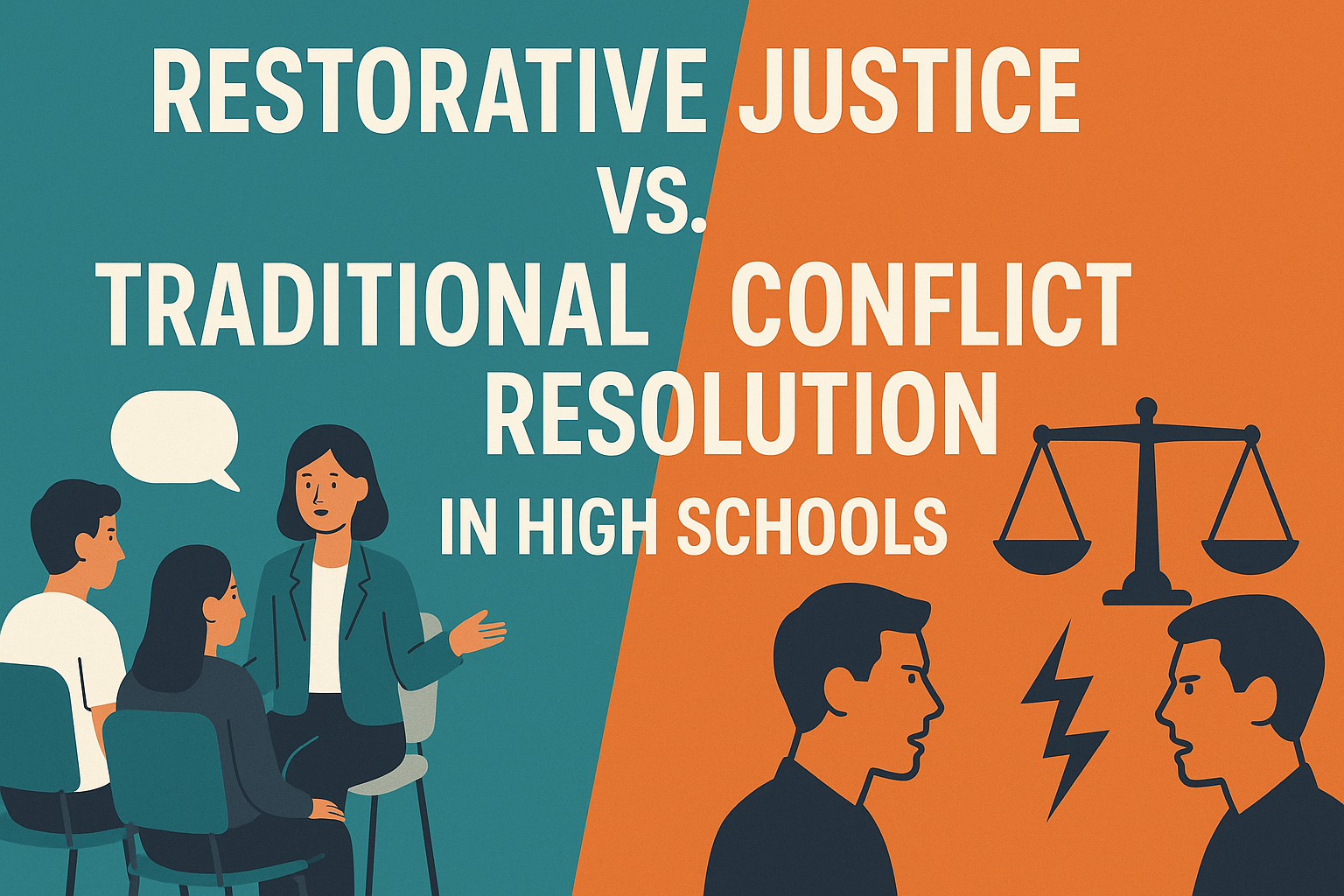
Introduction: Conflict is an inevitable part of school life, yet how it is handled can significantly impact students’ educational experiences and social development. Traditionally, schools have relied on punitive measures—like suspensions and expulsions—to manage conflicts. However, a growing movement toward restorative justice in schools is reshaping this approach. Restorative justice emphasizes repairing harm and fostering relationships, contrasting sharply with conventional methods. This article will explore seven key differences between restorative justice and traditional conflict resolution in high schools, highlighting the implications for students and educators alike.
1. Philosophical Foundations
At the core of any conflict resolution method lies its philosophical underpinnings. Traditional conflict resolution typically stems from a retributive justice model, which focuses on punishment and accountability through disciplinary actions. The primary aim is to deter future misbehavior by imposing consequences on the offender. In contrast, restorative justice in schools is rooted in a philosophy that prioritizes community and healing. It views conflict as an opportunity for growth and understanding, encouraging offenders to take responsibility for their actions and make amends.
This philosophical shift has profound implications for how students perceive conflict and their role within the school community. Restorative practices encourage students to reflect on their actions, fostering empathy and understanding, rather than simply instilling fear of consequences. This can lead to a more supportive school environment where students feel safe to express themselves and work through their disagreements constructively.
2. Approach to Conflict
In traditional conflict resolution, the approach tends to be adversarial. Conflicts are often seen as a battle between the wrongdoer and the victim, with a clear winner and loser. Disciplinary measures are handed down as a response to behavior deemed unacceptable, often sidelining the emotional and social aspects of the conflict. The focus is primarily on the incident itself rather than the individuals involved.
Conversely, restorative justice fosters a collaborative approach to conflict resolution. It encourages dialogue among all parties affected by the conflict, including the victim, the offender, and sometimes even the broader community. This inclusive approach aims not just to address the behavior but to heal the relationships that have been damaged. By allowing all voices to be heard, restorative justice promotes a sense of accountability and shared responsibility, ultimately leading to more meaningful resolutions.
3. Consequences and Accountability
When dealing with conflict, schools employing traditional methods often impose consequences that are predetermined and standardized. A student might receive a suspension for a specific offense, regardless of the context or motivations behind the behavior. This can lead to feelings of resentment and alienation, and in some cases, may exacerbate the underlying issues that led to the conflict.
In contrast, restorative justice in schools seeks to create individualized consequences that aim to repair the harm done. Instead of merely punishing the offender, restorative practices might involve community service, mediation sessions, or even restorative circles where students can engage in open dialogues. This approach not only holds students accountable but empowers them to take responsibility for their actions in a constructive manner, promoting personal growth and learning.
4. Impact on School Climate
The impact of restorative justice on school climate can be significant. Traditional punitive measures often contribute to a culture of fear and mistrust among students. When students are afraid of disciplinary repercussions, they may feel less inclined to communicate openly with teachers and peers, leading to a more chaotic and less conducive learning environment. (See: CDC on restorative justice in schools.)
In contrast, schools implementing restorative justice practices often report improved school climates. When students are actively involved in addressing conflicts and resolving issues collaboratively, it fosters a sense of belonging and responsibility within the school community. Research indicates that restorative justice can lead to reduced behavioral incidents, increased attendance, and a more positive attitude towards school among students. This is especially important in creating an environment where students feel seen, heard, and valued.
5. Long-Term Benefits for Students
While immediate resolution of conflicts is essential, the long-term benefits of restorative justice in schools are also noteworthy. Traditional conflict resolution methods may provide short-term fixes but often fail to address the root causes of behavior. Students subjected to punitive measures may develop negative attitudes towards authority, school, and even their peers, leading to a cycle of conflict and disengagement.
Restorative justice, on the other hand, equips students with essential life skills such as empathy, communication, and conflict resolution. By engaging in restorative practices, students learn to navigate their emotions and relationships more effectively, setting the stage for healthier interactions in their personal and professional lives. These skills are invaluable, not just within the school context, but also in their future endeavors as responsible citizens.
6. Role of Educators
The role of educators in traditional conflict resolution is often that of a disciplinarian, focusing on enforcing rules and administering consequences. This can create a power dynamic that alienates students and may hinder effective communication. Teachers may feel like they are caught in the middle, trying to manage behavior without fully understanding the context or motivations behind student actions.
In a restorative justice framework, educators become facilitators of dialogue and understanding. They guide students through conflict resolution processes, helping them to articulate their feelings and understand others’ perspectives. This shift encourages educators to build deeper relationships with their students and fosters a supportive environment conducive to learning. Teachers trained in restorative practices often report higher levels of job satisfaction and improved relationships with students, making their roles more fulfilling and impactful.
7. Challenges and Considerations
While the benefits of restorative justice in schools are compelling, there are challenges and considerations to keep in mind. Implementing restorative practices requires a cultural shift within the school community. Educators might need training and support to effectively facilitate restorative processes, and there can be resistance from staff who are accustomed to traditional disciplinary methods. Additionally, some conflicts may be too severe for restorative practices alone, necessitating a hybrid approach that includes some level of disciplinary action.
Furthermore, for restorative justice to be effective, it must be embraced at all levels—from administrators to teachers to students. This collective commitment is essential for creating a truly restorative school culture. Ongoing training, community involvement, and open communication can help to address these challenges, ensuring that restorative justice becomes an integral part of the school’s approach to conflict resolution.
8. Implementing Restorative Justice Programs
Implementing restorative justice in schools requires careful planning and commitment. Schools can start by offering training sessions for educators, staff, and students, focusing on conflict resolution techniques, communication skills, and the principles of restorative justice. Collaborating with community organizations can also enhance the program’s effectiveness, providing additional resources and expertise. (See: NIJ overview of restorative justice.)
Furthermore, establishing a restorative justice team within the school can lead to a more structured approach. This team can oversee the implementation of restorative practices, ensure that all voices are considered, and monitor progress. Regular feedback from students and staff can guide adjustments to the program, ensuring it meets the evolving needs of the school community.
9. Case Studies and Success Stories
Several schools across the globe have successfully integrated restorative justice into their conflict resolution strategies. For instance, a high school in Oakland, California, implemented restorative justice practices and saw a 40% decrease in suspensions over three years. Students reported feeling more connected to their peers and teachers, leading to a more harmonious school environment.
In another case, a school in New Zealand adopted restorative circles as a way to handle conflicts. The result was not only a reduction in disciplinary actions but also improved academic performance, as students felt more supported and engaged in their learning environment. These examples illustrate the potential impact of restorative justice on student well-being and academic achievement.
10. Statistics Supporting Restorative Justice
Statistics highlight the positive outcomes associated with restorative justice in schools. A study by the University of Denver found that schools utilizing restorative practices experienced a 69% reduction in office referrals and a 72% drop in suspensions. Additionally, a report from the Institute for Educational Leadership showed that restorative justice initiatives can lead to a 30% increase in student engagement and a 25% improvement in graduation rates.
These statistics not only reinforce the effectiveness of restorative justice but also encourage more schools to consider adopting such practices as a viable alternative to traditional disciplinary measures.
11. Frequently Asked Questions
What is restorative justice in schools?
Restorative justice in schools is a conflict resolution approach that focuses on repairing harm and fostering relationships, rather than simply punishing students for misbehavior. It aims to involve all affected parties in a dialogue to understand the impact of the conflict and work toward a resolution.
How does restorative justice differ from traditional discipline?
Traditional discipline is often punitive and focuses on enforcing rules through consequences like suspensions. Restorative justice emphasizes understanding, accountability, and community, seeking to heal relationships rather than solely punish the wrongdoer.
Can restorative justice be used in all types of conflict?
While it can be effective in many situations, some conflicts may be too serious for restorative practices alone. In such cases, a hybrid approach that combines restorative elements with appropriate disciplinary action may be necessary.
How can schools start implementing restorative justice?
Schools can begin implementing restorative justice by training educators and staff, forming a restorative justice team, and involving the community. Starting small with pilot programs can help schools refine their approach before full implementation.
What are the long-term benefits for students?
Long-term benefits of restorative justice include improved conflict resolution skills, enhanced empathy and communication, and a more positive school climate. These skills are invaluable as students navigate future personal and professional relationships.
Is there evidence that restorative justice works?
Yes, numerous studies and case examples show that restorative justice can lead to significant reductions in suspensions and disciplinary actions, as well as improvements in student engagement and academic performance.
How do parents and the community fit into restorative justice?
Engaging parents and community members is crucial for successful restorative justice implementation. Their involvement can provide support, resources, and a sense of shared responsibility in fostering a positive school environment.
Conclusion: As schools continue to explore effective methods for addressing conflict, the contrasting approaches of restorative justice and traditional conflict resolution present vital considerations. While traditional methods focus on punishment, restorative justice in schools emphasizes healing and relationship-building, promoting a healthier school climate and equipping students with essential life skills. By understanding these differences, educators and policymakers can make informed decisions about conflict resolution strategies that best meet the needs of their communities. As interest in restorative practices grows, it is imperative to continue studying their impact and refining their implementation to ensure that all students can thrive in a supportive and inclusive educational environment.
“`
Trending Now
Frequently Asked Questions
What is the difference between restorative justice and traditional conflict resolution?
Restorative justice focuses on repairing harm and fostering relationships, while traditional conflict resolution often emphasizes punishment and accountability. The former encourages reflection and understanding, whereas the latter views conflicts as adversarial battles, typically resulting in disciplinary actions.
How does restorative justice benefit students in high schools?
Restorative justice promotes empathy, understanding, and personal responsibility among students. By encouraging them to reflect on their actions and make amends, it helps create a supportive school environment where conflicts can be resolved constructively, enhancing social development.
Why are schools moving towards restorative justice practices?
Schools are adopting restorative justice practices to shift away from punitive measures that can alienate students. This approach aims to foster a sense of community and healing, ultimately leading to better educational experiences and improved relationships among students.
What are the philosophical foundations of restorative justice in schools?
Restorative justice is grounded in a philosophy that prioritizes community and healing, viewing conflict as an opportunity for growth. This contrasts with traditional methods that are rooted in retributive justice, focusing on punishment and deterrence of future misbehavior.
How does traditional conflict resolution affect student behavior?
Traditional conflict resolution can instill fear of consequences, leading to a negative perception of conflict. This adversarial approach may result in students feeling isolated or disengaged, whereas restorative practices aim to build empathy and constructive conflict resolution skills.
What did we miss? Let us know in the comments and join the conversation.