Early Childhood & K-12 EdTech

10 Chicka Chicka Boom Boom Activities That You’ll Love

Introduction:

Chicka Chicka Boom Boom, the popular children’s book by Bill Martin Jr. and John Archambault, is a perennial favorite because of its catchy rhymes and colorful illustrations. If you’re looking to bring this beloved story to life and create interactive learning experiences for your little ones, consider these 10 entertaining and educational Chicka Chicka Boom Boom activities that you and your child will enjoy.

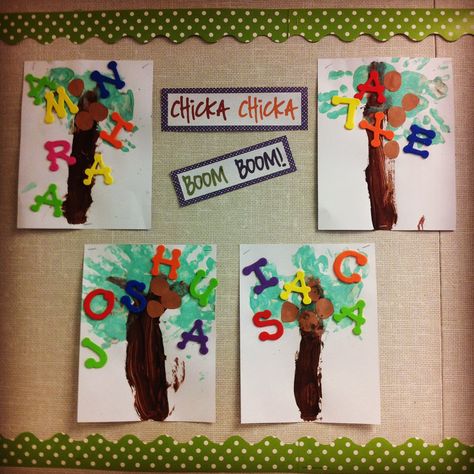
1. Alphabet Tree Craft

Using some simple craft materials like paper, markers, glue, and scissors, create a beautiful alphabet tree that brings the story to life. Assist your child in cutting out letters and arranging them on the tree, promoting creativity as well as letter recognition.

2. Letter Matching Game

Create a fun matching game by printing out two sets of upper case letters from the alphabet. Place one set on the floor or table and encourage your child to match them with their corresponding letters from the other set.

3. Sensory Coconut Play

Use real coconuts to create an exciting sensory play experience. Let your child explore their texture and weight, comparing how they feel both inside and outside.

4. Chicka Chicka Boom Boom Song

Turn the story into a song by singing along with your child as you read through the pages. This will not only improve their rhythm but also their memorization of the alphabet.

5. Letter Hunt

Hide paper or foam letters around the room or backyard for your child to find. Turn it into a learning game by having them call out each letter they discover.

6. Alphabet Fishing Game

Create a fishing game using magnets, string, and paper letters with metal clips attached. Let your little one go “fishing” for various alphabet letters while developing hand-eye coordination skills.

7. Palm Tree Cupcakes

Bake some delicious cupcakes with an edible palm tree (made with pretzel sticks and green candy) to create a story-themed treat. This tasty activity also involves counting skills as your child places the right amount of “coconuts” on each tree.

8. Chicka Chicka Boom Boom Coloring Pages

Print some coloring pages featuring characters and scenes from the book. Let your little one express their creativity with this relaxing art activity.

9. Alphabet Race Game

Set up a simple board game with an alphabet path that children can navigate with dice. The objective is to help their letter reach the top of the coconut tree first, reinforcing letter recognition and turn-taking skills.

10. Chicka Chicka Boom Boom Puppets

Create cute finger puppets or paper bag puppets based on various characters from the book. Engage in interactive storytelling by encouraging your child to act out scenes using these adorable creations.

Conclusion:

With these 10 Chicka Chicka Boom Boom activities, you’ll be able to make learning fun for your child while introducing them to essential reading, creative, and fine motor skills. Choose one or several of these enjoyable projects and watch as your child grows and thrives in both their love for books and their understanding of the alphabet.

6 Easy Ways to Assess Pre-Reading Skills in the ECE Classroom

As every educator knows, early childhood education (ECE) is a crucial period for developing the foundations of reading and literacy. By fostering a strong pre-reading foundation in these early years, children will be better equipped for success throughout their academic journey. Here are six easy ways to assess pre-reading skills in the ECE classroom:

1. Rhyme Recognition: Enhancing a child’s understanding of rhyming words and sounds can help them begin to recognize patterns in language. To assess rhyme recognition, present the students with pairs of words – some that rhyme and some that do not. Ask them to identify which words rhyme and if they can, provide additional rhyming words on their own.

2. Letter and Sound Identification: Familiarity with letter names and sounds is fundamental for reading development. Using flashcards or letter tiles, ask students to name or provide the sound of each letter. Keep track of their progress so you can support those who might be struggling or require extra practice.

3. Print Awareness: Understanding how books and print work is an important aspect of pre-reading. Encourage students to interact with books by asking them questions like, “What is the title?”, “Where is the front cover?”, or “What direction do we read in?”. Observing students during storytime can also give insight into their print awareness.

4. Phonemic Awareness: The ability to manipulate and identify individual sounds within words is essential for reading readiness. Assess phonemic awareness by asking students to identify the first or last sound in a given word. Alternatively, have them segment a simple word (e.g., cat) into its individual sounds (c-a-t).

5. Sight Word Recognition: Familiarity with common sight words can foster reading fluency in later years. Therefore, testing students’ proficiency with sight words can be a helpful assessment tool. Provide a list of age-appropriate sight words for students to recognize and read aloud.

6. Storytelling and Comprehension: Listening and comprehension skills are crucial for reading success. Engage students in storytime activities where they can listen to stories, and then ask questions about the story’s plot, characters, or setting to gauge their comprehension. Also, encourage them to create their own stories to assess their grasp of narrative structure.

Utilizing these six methods will provide a well-rounded view of a student’s pre-reading abilities and help shape effective, tailored instruction in the ECE classroom. Remember that early intervention is key; by addressing any challenges or areas for growth in pre-reading skills, you will set your students on the path to a successful reading journey.

7 Reasons Why Handwriting Matters (and Your School Should Teach It!)

Introduction:

In today’s digital world, one might assume that old-fashioned, manual skills like handwriting are becoming obsolete. However, that couldn’t be further from the truth! Handwriting still plays a vital role in the education system and beyond. Here are seven compelling reasons why your school should prioritize teaching handwriting.

1. Boosts Cognitive Development:

Research has shown that the physical act of writing by hand enhances cognitive development in children. When students write by hand, they engage various parts of their brain, promoting stronger neural connections and enhancing their ability to learn.

2. Enhances Memory Retention:

Handwriting has been linked to improved memory retention. Studies have found that when compared to typing, students who write notes by hand tend to remember the information better. The act of writing forces them to process information more deeply, improving overall comprehension.

3. Encourages Creativity:

Handwriting fosters creativity and self-expression. Through penmanship, students can explore different writing styles and develop their unique voice. Moreover, the act of writing by hand can spur creative thinking as it engages multiple senses.

4. Cultivates Fine Motor Skills:

Handwriting requires fine motor skills and coordination between the hand, fingers, and wrist. Developing these skills is crucial for grasping objects, tying shoes, or playing musical instruments. Teaching handwriting in schools will greatly benefit students in developing these abilities.

5. Improves Focus and Concentration:

In our fast-paced digital world, maintaining focus can be challenging for students. Research shows that writing by hand can improve concentration as it requires deliberate effort and can slow down thought processes while putting ideas on paper.

6. Facilitates Goal Setting:

Writing down goals makes it easier for individuals to visualize their desired outcomes, making them more committed to achieving them. When students learn how to set goals through handwriting exercises, they’re more likely to stay on track.

7. Supports Psychological Wellness:

Handwriting exercises can reduce stress and anxiety levels. The rhythmic movement of pen on paper can be therapeutic, while the act of journaling is a proven way of processing emotions, improving self-awareness, and fostering mental wellbeing.

Conclusion:

Handwriting may seem like an antiquated skill in our digital age, but it still holds immense value for students’ cognitive development, creativity, fine motor skills, focus, goal-setting abilities, and psychological wellness. By teaching handwriting in schools, we are preparing students for a brighter future with a strong foundation in this indispensable skill.

12 Amazing Kindergarten Assessment Ideas

As an educator, assessing the progress of your kindergarten students is crucial in ensuring their academic growth and development. To make the evaluation process engaging and fun for young learners, here are 12 amazing assessment ideas that you can implement in your classroom:

1. Portfolio Assessments: Create a portfolio for each student to collect samples of their work throughout the year. These portfolios will showcase students’ progress in various areas, such as reading, writing, math, and art.

2. Observation Checklists: Use classroom observation checklists to document students’ skills and behaviors in different contexts. This will help you understand their social skills, emotional development, and learning abilities.

3. Popsicle Stick Stories: Have students create stories using popsicle sticks decorated with images or words. Then ask them to arrange the sticks in sequential order to practice storytelling skills and assess their understanding of narrative structure.

4. Letter Sound Bingo: Create bingo cards with letters or letter-sound combinations that your students are learning. Have them find objects around the classroom that begin with those sounds and place them on the corresponding squares on their bingo card to practice phonics skills.

5. Math Manipulatives Challenges: Use math manipulatives such as pattern blocks, counting bears, or geoboards to foster problem-solving skills and assess numeracy abilities.

6. Class Art Gallery: Organize a class art gallery where students display their artistic creations. This will allow you to evaluate their fine motor skills, creativity, and attention to detail.

7. Show and Tell: Host a show and tell session where each student presents a personal item or project. This encourages public speaking, listening skills, and builds self-confidence while giving you insights into their interests and personalities.

8. Group Reading Session: Assess reading fluency by having students read aloud in pairs or small groups while they listen to one another for comprehension.

9. Hands-on Science Experiments: Engage students in simple science experiments that align with your curriculum. Assess their understanding of scientific concepts and their curiosity about the world around them.

10. Puppet Show Conversations: Encourage students to create conversations between two puppets, allowing them to showcase their verbal communication skills and ability to engage in dialogue.

11. I-Spy Shape Hunt: Assess geometric understanding by sending students on a shape hunt around the classroom to find and label various shapes.

12. Personal Goal Setting: Have students create individual learning goals and track their progress throughout the year. This will foster self-awareness, reflection, and motivation for continued growth.

By incorporating these engaging strategies into your kindergarten assessment routine, you’ll create a positive learning environment that allows young students to develop essential skills and celebrate their achievements. Remember always to adapt these ideas to fit the unique needs and abilities of your students.

12 Activities to Celebrate Winnie the Pooh

Winnie the Pooh, the delightful bear created by A.A. Milne, has captured the hearts of children and adults alike for generations. With his adorable friends from the Hundred Acre Wood, Pooh Bear teaches us valuable lessons about friendship, love, courage, and kindness. If you’re planning to celebrate Winnie the Pooh, here are 12 fun and engaging activities to make your event memorable.

1. Honey Pot Hunt: Hide small honey pots around the party area filled with treats or trinkets. Have guests search for them and discover what’s inside.

2. Pooh Bear Dress-Up: Encourage guests to come dressed as their favorite characters from the Hundred Acre Wood, such as Tigger, Piglet, Eeyore, and Rabbit.

3. Pin the Tail on Eeyore: Create a classic twist on “Pin the Tail on the Donkey” by using an image of Eeyore and providing a detachable tail with double-sided tape.

4. Tigger’s Bounce Race: Organize a bounce race where participants must jump like Tigger while racing to the finish line.

5. Heffalump Balloon Pop: Draw faces of Heffalumps on green balloons and ask participants to stomp or pop them to save the Hundred Acre Wood from these mysterious creatures.

6. Musical Honey Pots: Play musical chairs but replace chairs with honey pots images placed on the ground. When someone gets eliminated, reward them with a sweet honey-based treat!

7. Winnie’s Guessing Game: Fill a jar with red or orange gummy bears and have participants guess how many are inside – the closest guess wins a prize!

8. Make Your Own Honeycomb Snacks: Provide guests with pretzel sticks and melted honey for dipping to create fun honeycomb-shaped snacks.

9. Story Time: Gather everyone to enjoy a reading of a classic Winnie the Pooh story. You can even invite a “guest reader” to dress up as their favorite character and read aloud.

10. Create-Your-Own 100-Acre Wood: Set up a craft station with various materials for guests to create their own 100 Acre Wood scene, complete with trees, flowers, and adorable woodland creatures.

11. Pass the Heffalump: Sitting in a circle, pass around a small stuffed Heffalump while playing music. When the music stops, the person holding the Heffalump is given a small prize or an extra turn to play another game.

12. Pooh-themed Coloring Pages: Print out your favorite scenes from the Hundred Acre Wood and provide coloring supplies for guests to relax and create their own artwork.

With these activities, your Winnie the Pooh celebration will be full of fun, laughter, and cherished memories with friends and family. Don’t forget to capture those treasured moments to share!

40 Teacher-Approved Kindergarten Workbooks

As a parent or a teacher, finding quality workbooks to supplement your child’s or student’s learning can be a challenging task. To make your search easier, we’ve compiled a list of 40 teacher-approved kindergarten workbooks that cover a range of subjects and skills. From math and reading to fine motor development, these workbooks are designed to support and enhance your child’s learning experience.

1. School Zone – Big Kindergarten Workbook

2. Scholastic Success with Reading Comprehension, Kindergarten

3. Brain Quest Workbook: Kindergarten

4. Highlights Learn on the Go Practice Pad: Shapes and Patterns

5. Carson-Dellosa Writing Readiness Grades K-1 Workbook

6. Star Wars Workbook: Kindergarten Writing and ABCs

7. Kumon My First Book of Cutting

8. Ready, Set, School! A Parents’ Guide to Kindergarten Readiness

9. LeapFrog LeapStart Preschool Success Activity Book

10. The Ultimate Kindergarten Prep Guide by Jennifer Hurren

11. My Big Spanish Workbook: 101 Fun and Educational Activities for Kindergarteners

12. ALEX Toys Little Hands First Scribble

13. Phonics for Kindergarten: Grade K (Home Workbook)

14. Bob Books Set 1: Beginning Readers

15. Teach Your Child to Read in 100 Easy Lessons

16. Play Smart Skill Builders Age 3+: At-Home Activity Workbook

17. The Ready-Set-Learn Collection for K-1 by Creative Teaching Press

18. Amazing Mazes for Kids – Ages 3-7

19. Numbers 1-30 Write & Wipe Flash Cards (Kumon Flash Cards)

20. Alphabet Sticker Math by Evan-Moor Educational Publishers

21. First Grade Spelling Words Play & Learn Puzzles (Highlights)

22. My First Get Ready for School Workbook (Highlights)

23. Pencil Control: Kindergarten My First Workbook

24. Math Made Easy: Kindergarten Workbook by DK Publishing

25. Complete The Picture Math (Teacher Created Resources)

26. Color by Numbers Books for Kids: Ages 3-5

27. Tracing Letters, Numbers, and Shapes: Ages 4-6

28. Crazy A’s Multiplication Cards (Crazy A’s Math Made Fun)

29. Time and Money Play & Learn Puzzles (Highlights)

30. Sight Words for Kindergarten: Learning to Write Workbook

31. My Rhyming Dictionary: Brighter Child Workbooks

32. Finger Phonics Books Set 1-7 (Jolly Phonics)

33. Telling Time Flash Cards for K-2 (Brighter Child)

34. DK Workbooks: Science, Kindergarten

35. GeoSafari Jr See and Say Animals – Early Science Learning Book

36. LEGO® DUPLO® on the Farm Sticker Activity Book

37. The Everything Kids’ Connect the Dots Puzzle and Activity Book

38. All Sorts of Noises – A Fun Phonics Readers Set for Young Children

39. Saxon Math K: Student Workbook Part 1

40. Little Skill Seekers: Hands-On Thinking Skills

These workbooks have been highly recommended by teachers and parents alike, ensuring a well-rounded and engaging educational experience for your child in kindergarten. With these resources at your disposal, you’ll be well on your way to empowering your child’s learning journey!

The Best Construction and Building Toys, According to Teachers

Introduction

When it comes to fostering a child’s creativity, problem-solving skills, imagination, and spatial understanding, construction and building toys are an essential addition to any playroom. Teachers and educators everywhere agree that these toys hold the key to unlocking a child’s inner potential. In this article, we will explore the best construction and building toys recommended by teachers to help develop these valuable skills in children.

1. LEGO Classic Creative Bricks

LEGO Classic Creative Bricks come highly recommended by teachers for their versatility and the endless possibilities they provide. These colorful bricks are perfect for children of all ages, allowing them to create anything they can imagine while developing their fine motor skills, cognitive skills, and creativity. Moreover, LEGO sets can be easily integrated into STEM education for teaching various concepts in science, technology, engineering, and mathematics.

2. Magna-Tiles

Magna-Tiles are magnetic building pieces designed for children aged three years and older. With their unique design, Magna-Tiles encourage children to create 2D patterns or build 3D structures while learning about basic geometric shapes and principles of magnets. Teachers love that Magna-Tiles offer an opportunity for open-ended play while encouraging spatial awareness, hand-eye coordination, fine motor skills development, and creative thinking.

3. K’NEX

K’NEX sets include interlocking plastic rods, connectors, gears, wheels, and other versatile components. They promote complex problem-solving skills and mechanical engineering knowledge as children construct everything from simple structures to intricate machines. These toys allow kids aged 5 to 14 years old to imagine and create elaborate designs while improving their hand-eye coordination.

4. Tinkertoys

Tinkertoys is a classic construction toy with wooden spools and rods connected by flexible rubber tubes. These sets encourage creativity through open-ended play while promoting fine motor skill development and hand-eye coordination. Used in classrooms for generations, Tinkertoys are still well-loved by teachers as an essential tool for fostering critical thinking and creativity.

5. Marble Genius Marble Run

The Marble Genius Marble Run is a building toy that allows children to design and construct elaborate marble runs, promoting their understanding of physics principles and gravity. Suitable for ages 4 and up, the marble run offers endless possibilities that stimulate problem-solving skills, spatial reasoning, and cause-effect relationships. Teachers appreciate the educational value this toy brings to a child’s development.

Conclusion

Among countless options available today, these five construction and building toys have stood out as the best choices according to teachers. They provide hours of entertainment while improving essential developmental skills such as creativity, problem-solving, fine motor skills, spatial awareness, and cognitive abilities. By incorporating these construction toys into the educational process or playtime at home, every child can embrace their creative potential while engaging in meaningful learning experiences.

Media Literacy: Everything You Need to Know

The NAMLE (National Association for Media Literacy Education) defines Literacy Education as the capacity to explore, utilize different communication methods. Media literacy is inclusive of actions as subtle as the interpretation of emojis, to being able to grasp the baseline messages passed across in online commercials, creating viral videos, and understanding native advertising. While it appears as though everyone who can access the internet should be able to apply these practical media literacy skills pragmatically, this is not true.

Interestingly, a good number of media users are oblivious to how much their actions online can impact others, and aren’t even aware of how susceptible they are to manipulation by the media. This makes it important to teach kids media literacy, which has become an indispensable skill in today’s digital age.

Though media literacy is a bit complicated to teach and learn, kids can benefit from it in different ways, as follows:

·         Learn critical thinking: As kids examine media, they’ll learn to decide if the messages add up, why particular information was included, why something else wasn’t, and what the key messages or ideas are. This’ll help them decide about the information using their previous knowledge and even support or disapprove of such information by drawing upon their past knowledge and experiences.

·         Become a smart consumer: Whether it’s a product, service, or information, media-literate kids will be able to decide if it’s credible or not. Media literacy will also help them spot persuasive intent in content that modern advertisers typically promote to sell their offerings. This will help the kids resist such marketing gimmicks and techniques and not fall prey to them easily.

·         Recognize the content creator’s point of view. Every content creator has a viewpoint. Media literacy helps kids identify an author’s approach and goal, thus making them understand and even appreciate diverse perspectives. It’ll also let them put information with respect to what they already know or believe they know.

·         Learn to be effective communicators: Digital literacy triggers exposure to different types of content and points of view. This helps kids understand the importance of effective communication, become aware of their own point of view, and learn how they can say what they want to say.

·         Identify media’s role in culture: From memes and magazine covers to celebrity gossip, sports, festivals, and politics, media brings almost everything within the kids’ grasp. This molds their understanding of the world and even influences them to think or act in certain ways.

16 Ways to Teach Students to Embrace Tasks and Learning Experiences

Are you looking for ways to teach students to embrace tasks and learning experiences? If so, keep reading.

1. Show the learner that work not done during work time must be done during other times (e.g., leisure time, break time, after school, etc.).

2. Give the learner a responsibility to be performed at several times throughout the day.

3. Show tasks and duties in the most attractive and exciting manner possible.

4. Talk regularly with the learner to maintain their involvement in tasks, duties, etc.

5. Make the appropriate adjustments in their surroundings to prevent the learner from experiencing stress, frustration, anger, etc., as much as possible.

6. Let the learner attempt something new in private before doing so in front of others.

7. Find variables in their surroundings that cause the learner to avoid situations, tasks, or duties; lessen or remove these variables from their surroundings.

8. Diversify the learner’s tasks and duties so the learner does not get tired of doing the same things.

9. Restrict the number of tasks and duties for which the learner is responsible. As the learner shows the capacity and ability to finish duties on time, slowly increase the number of tasks and duties.

10. Make sure the learner has all the appropriate learning materials to get tasks and duties done on time.

11. Do not accept excuses. The learner must know that, regardless of the reasons, it is appropriate that they take responsibility for not turning in a task, losing pencils, etc.

12. Take into account those things the learner may be trying to avoid. If something unpleasant is causing the learner to pretend to be sick, do all you can to eliminate or lessen the cause.

13. Provide the learner a special job for tasks (e.g., collecting math papers, passing out learning materials, sharpening pencils, etc.) to do when the learner finishes their work.

14. Provide instructions in a compassionate rather than menacing manner (e.g., “Please turn in your math paper.” rather than, “You had better turn in your math paper or else!”).

15. Sit down with the learner and discuss a list of tasks, duties, etc., that they need to do.

16. Consider using one of the apps and tools from our many app lists. These apps are designed to help students who are experiencing academic difficulties.


28 of the Best Apps for Kids in Kindergarten

28 of the Best Apps for Kids in the First Grade

39 of the Best Apps for Kids in the Second Grade

53 of the Best Apps for Kids in the Third Grade

37 of the Best Apps for Kids in the Fourth Grade

25 of the Best Apps for Kids in the Fifth Grade

28 of the Best Apps for Kids in the Sixth Grade

35 of the Best Apps for Kids in the Seventh Grade

28 of the Best Apps for Kids in the Eight Grade

27 of the Best Apps for Kids in the Ninth Grade

33 of the Best Apps for Kids in the Tenth Grade

20 of the Best Apps for Kids in the Eleventh Grade

14 of the Best Apps for Kids in the Twelfth Grade

Collaboration Apps, Tools, and Resources That I Would Use If I Were Still in the Classroom

Back in 2001, when I started as a teacher, the technology boom was in its nascent stage. I remember toting a large bag filled with papers home most nights and going to sleep drowning under a vast sea of student homework that needed grading. My classroom was even worse, cluttered with books, manipulatives, globes, maps, and learning stations that left little room for anything else. However, as I write this in 2018, things have changed dramatically. Today’s teachers have edtech in their corners.

Digital teaching and learning tools have streamlined education processes and provide learning experiences that stretch far beyond the materials that were available for me back in 2001. Teachers used to have to meet in person to collaborate on lesson plans, assessments, or other projects. Now, with the proliferation of collaboration apps and tools, educators can work with colleagues from all over the globe, without leaving the classroom. Imagine the possibilities. If I were still in the classroom today, I’d use these collaboration apps, tools, and resources:

Google Apps for Education: Educators can make excellent use of the free apps available in the Google Suite for Education. Students can efficiently collaborate on their documents with a real-time display of who is editing which parts. Together, a group of students can prepare a presentation with a slideshow, create a diagram, and so much more.

Zoho Meeting: This program allows you to host and attend online meetings from your device. The Desktop Meeting Plugin lets you arrange or attend meetings from your desktop, connecting with only one click. Share and switch screens between the presenter and participants to share information efficiently.

Kami – Kami is the paperless teacher assistant, which allows teachers to create, upload, save, and share their materials using Google Drive and Classroom. It enables students to make notes, highlight, and add shapes on the PDF files shared in class. The app is available for free. The paid version comes with extra features such as the ability to communicate with an additional 150 students, an option for adding images, and text-to-speech technology.

Classpartoo – This is a cloud-based classroom management app that helps teachers deal effectively with their everyday tasks such as recording exam grades, attendance, and student behavior. This app also includes teacher communities where teachers collaborate and share material. School administrators, using this program can set up a functional SIS or integrate it with their existing SIS.

Eazyschool – This online software empowers every school to create, collaborate, and communicate. Its interface allows teachers, administrators, parents, and students to interact. Teachers can arrange report sheets, process child progress reports, and interact with other schools. It is a web-based application, which is compatible with various browsers.

Zoho Calendar: Make individual and group plans using the Zoho Calendar app. Set reminders ahead of schedule, up to 90 days. Groups can share their calendars with other members of the same group or outside the group. Email invitations also can be sent to any email platform from the app.

MURAL– Brainstorming is simple, easy, and fun with MURAL. The app allows multiple students or group members to work together to collaborate, share ideas, and determine solutions. It will help make thoughts concrete and visual, so they can be further evaluated. MURAL creates

Did we miss any?