Early Childhood & K-12 EdTech

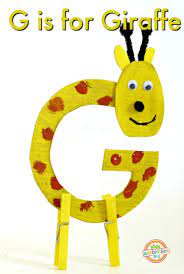
20 Letter G Activities For Preschool

As children embark on the exciting journey of learning the alphabet, incorporating engaging activities can make the process more enjoyable. In this article, we will explore 20 fun and educational activities focused on the letter “G” that are perfect for preschool-aged children.

1. Gumball Matching Game: Create a matching game with colorful gumball cut-outs, each featuring a different image representing things that start with the letter “G.”

2. Goat Puppet Craft: Have children create their own goat puppets using paper bags, markers or crayons, and craft supplies like googly eyes and yarn for hair.

3. G is for Garden: Plant a small garden together, focusing on plants that start with “G” like geraniums, garlic, and green beans.

4. Glitter Glue Letters: Encourage kids to write the letter “G” using glitter glue on construction paper.

5. G is for Grapes: Create grape crafts using purple pom poms or finger-painting purple clusters on paper plates.

6. Gather and Group: Collect various objects starting with “G” and have students sort them into groups based on similarities.

7. Gravity Experiment: Teach children about gravity through simple experiments involving dropping items from various heights.

8. Gorilla Art Project: Have children use their handprints to create gorilla art by painting their hands brown and pressing them onto paper.

9. Green Day: Encourage kids to wear green clothing and participate in activities centered around the color green.

10. Gingerbread Man Storytime: Share the classic story of the Gingerbread Man and make gingerbread cookies together.

11. Giggle Game: Play a game of trying not to giggle while making silly faces at one another.

12. Goose Feather Painting: Use goose feathers as paintbrushes to create unique artwork.

13. G is for Germs: Teach children about germs and the importance of handwashing with a fun glitter-based demonstration.

14. Giant Letter G: Work together to create a giant letter “G” using markers, crayons, or paint on a large sheet of paper or poster board.

15. Giraffe Measuring: Learn about the tallest animal on Earth, the giraffe, and practice measuring different heights using tape measures or rulers.

16. Alphabet Grocery Store: Set up a pretend grocery store where kids can “purchase” items that start with the letter “G.”

17. Gala Apple Tasting: Host an apple tasting party, featuring Gala apples, and encourage kids to describe the flavors and textures.

18. Geographic Treasure Hunt: Create a simple treasure hunt for children to explore their surroundings and discover items that start with “G.”

19. G is for Gift: Make a gift-themed craft using recycled materials like cardboard boxes and tissue paper.

20. Gymnastics Activity: Set up a simple gymnastics obstacle course for children to practice tumbling and balancing skills.

Implementing these 20 letter G activities in your preschool curriculum will not only make learning enjoyable but also help solidify the recognition and understanding of this important letter in your young students’ minds. So go ahead and start exploring the world of the “grape,” “giraffe,” “goose,” and everything else starting with “G!”

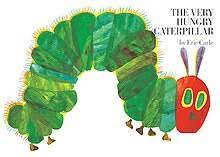
The 20 Best Very Hungry Caterpillar Activities

1. Caterpillar to Butterfly Life Cycle Exploration: Teach children about the transformation from caterpillar to butterfly using hands-on materials, like modelling clay and pipe cleaners.

2. Caterpillar Finger Puppets: Create cute finger puppets with colorful felt and googly eyes, so kids can reenact the story of “The Very Hungry Caterpillar.”

3. Fruit Salad Treat: Make a fruit salad using the fruits that the caterpillar ate in the story, encouraging a healthy snack while teaching children about counting and sequencing.

4. Caterpillar Egg Carton Craft: Repurpose cardboard egg cartons into charming caterpillars with paint, pipe cleaners, and googly eyes.

5. Hole Punching Activity: Strengthen fine motor skills by having children use hole punches on paper replicas of fruits that the Very Hungry Caterpillar ate in the story.

6. Caterpillar Size Sorting Activity: Arrange caterpillars made from pipe cleaners or other craft materials by size while practicing counting and categorizing skills.

7. Storytelling Yoga: Incorporate movement into story time by teaching children yoga poses inspired by “The Very Hungry Caterpillar”, such as inchworm and butterfly pose.

8. Counting and Color Matching Game: Create a simple matching game using colors and numbers from the story to enhance learning and memory recall.

9. Collage Creations: Encourage creativity by providing children with various craft materials to design their own Very Hungry Caterpillars and other creatures from the book.

10. Leaf Eating Race: Set up a relay race for kids to pretend they’re hungry caterpillars munching on leaves as they crawl around a designated area outside.

11. Sensory Bin Exploration: Fill sensory bins with items relating to the story’s characters, such as textured fabrics, fake foliage, and toy insects for tactile learning experiences.

12. DIY Butterfly Wings: Craft colorful butterfly wings from materials like paper, cardboard, or fabric for an engaging dress-up experience.

13. Caterpillar Math Activities: Use the story’s counting theme to practice math skills by creating caterpillar-themed addition, subtraction, and multiplication problems.

14. Memory Game: Make a matching memory game using illustrations or objects from “The Very Hungry Caterpillar”, enhancing children’s memory and focus.

15. Story Writing Prompt: Encourage children to write their own stories, imagining what adventures the Very Hungry Caterpillar may have after becoming a butterfly.

16. Build a Butterfly Habitat: Teach children about the importance of butterflies in nature by building a mini butterfly habitat using plants, flowers, and other natural materials.

17. Fruit Stamping Art: Use fruits from the story dipped in paint to create edible-inspired artwork relating to “The Very Hungry Caterpillar.”

18. Textured Collages: Enhance fine motor skills with this hands-on activity – using textured materials like bubble wrap and sandpaper to create tactile collages inspired by the story.

19. Symmetry Butterfly Painting: Teach children about symmetry with this interactive painting activity – fold a piece of paper in half, apply paint dollops on one side, and press together to create beautiful, symmetrical butterflies.

20. DIY Board Game: Design a board game based on “The Very Hungry Caterpillar” where players advance through spaces by answering questions or completing fun challenges related to the story.

Monitor each activity according to the age and skill level of participating children and enjoy the excitement these inspired activities bring out as kids explore “The Very Hungry Caterpillar” in all its colorful glory!

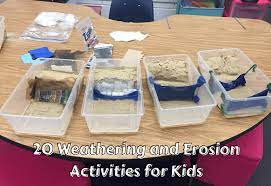
20 Weathering and Erosion Activities for Kids

Introduction: Understanding the natural processes of weathering and erosion is an essential part of science education. These phenomena are the forces behind shaping our planet’s landscapes, from mountains to valleys, rivers to deserts. Here are 20 fun and engaging weathering and erosion activities that can help children learn about these fascinating processes.

1. Rock Tumbler – Create a DIY rock tumbler using a jar filled with sand, water, and rocks. Shake the jar daily to observe the changes in the rocks’ shapes.

2. Edible Erosion – Use graham crackers, chocolate chips, and frosting to represent soil layers and demonstrate how erosion affects land vertically.

3. Sugar Cube Erosion – Watch how water erodes sugar cubes placed in a shallow pan, creating unique patterns over time.

4. Crumbling Crayons – Rub crayons against coarse sandpaper to observe different materials’ wear rates via mechanical weathering.

5. Popsicle Stick Bridges – Build small bridges with popsicle sticks and test their strength against wind (fan), water (spray bottle), or gentle shaking.

6. Sand Art Landscapes – Create works of art with colored sand that showcase the effects of wind erosion.

7. Ice Age In A Bag – Freeze water mixed with soil to replicate glacial action, then scrape the frozen mass across surfaces to observe erosion.

8. Mini Waterfall – Construct a mini waterfall using a tray filled with pebbles and pour colored water over it to simulate erosion patterns.

9. Clay Erosion Model – Sculpt a landscape out of clay, pour water over it gradually, and record the changes caused by erosion.

10. Garden Stream – Design a stream in your garden, using sandbags and small rocks to observe how running water erodes surrounding soil.

11. Windy Weather Simulation – Use a fan and sand in a container to demonstrate the effects of wind on loose particles and observe how various objects create windbreaks.

12. Acid Rain Experiment – Simulate the impact of acid rain on rocks using chalk, water, and vinegar to demonstrate chemical weathering.

13. Eggshell Erosion – Discover how toothpaste protects our teeth by letting eggshells soak in soda and vinegar, showing the consequences of acid erosion.

14. Erosion Walk – Go for a walk in your local park, forest or beach, and identify evidence of erosion.

15. Salt Cube Sculptures – Create salt dough or sugar cube landscapes and erode these structures using water spray or dropper bottles.

16. Weathering And Erosion Jenga – Transform Jenga into an educational game by adding questions about weathering and erosion on each block.

17. Lava Flow Experiment – Observe the effects of lava flow on the landscape by pouring red-colored corn syrup over an elevated surface made of modeling clay or dirt.

18. Stop Motion Animation Project – Have kids recreate weathering and erosion processes using stop motion animation and clay or playdough figures.

19. Nature Collage – Collect natural materials such as leaves, twigs, rocks, sand, and soil to create a collage representing different kinds of weathering and erosion.

20. Weathering And Erosion Scavenger Hunt – Design a scavenger hunt for kids to find local examples of landforms shaped by weathering or erosion processes.

Conclusion: These enjoyable activities are not only entertaining but also provide valuable lessons about the science behind our planet’s ever-changing landscapes. Empower your kids with knowledge through hands-on experiences that spark their curiosity about nature!

21 Construction Games for Kids That Will Spark Creativity

As children grow, it’s important that we nourish their minds with creative and engaging activities to help them develop essential skills. One area that can ignite a child’s creativity is construction games. These activities not only keep children entertained but also stimulate their logical thinking, problem-solving skills, and spatial awareness. In this article, we’ll explore 21 construction games that will spark your child’s creativity.

1. LEGO Duplo Sets: These oversized LEGO blocks are perfect for young children to create imaginative structures while developing fine motor skills.

2. K’NEX: Allow your child to become a budding engineer with K’NEX, as they use rods and connectors to create unique designs.

3. Marble Runs: A fascinating way for kids to learn about physics and cause and effect, marble runs provide endless fun in building and watching paths for marbles to travel down.

4. Tinkertoy Sets: Connect different pieces to create a variety of structures using these popular construction sets.

5. Meccano Sets: As kids age, Meccano sets offer more complex engineering challenges to tackle with nuts, bolts, and metal parts.

6. Wooden Blocks: A timeless classic, wooden blocks allow for open-ended play and exploration of structures and buildings.

7. Zoob BuilderZ: With colorful pieces that snap together in various ways, Zoob BuilderZ allows for endless inventiveness.

8. Straw Constructor Kits: Simple yet effective, these kits teach kids about engineering principles by connecting straws with connectors.

9. Magna-Tiles: With their magnetic edges, Magna-Tiles become a versatile option for imaginative building play.

10. Fort Building Kits: Encourage teamwork as children create hideouts or forts using fabric panels and frames provided.

11. Gears! Gears! Gears!: Develop your child’s STEM skills with gears-based playsets that can be constructed in countless combinations.

12. Play-Doh: Molding and sculpting with this classic play compound can foster a young child’s creativity.

13. Rock’em Sock’em Robots: Quick assembly and entertaining gameplay make this game a hit among children who enjoy some action with their construction projects.

14. GoldieBlox Sets: Encourage girls to explore STEM concepts with construction sets specifically designed to appeal to their interests.

15. Jumbo Cardboard Blocks: Go big with these sturdy but lightweight building materials that can create life-size structures.

16. Squigz: Few construction games are quite as satisfying as connecting these suction-based construction toys together.

17. Roominate Sets: Expand your child’s imagination with construction sets that allow them to create not just structures, but entire miniature rooms with functioning circuits.

18. Q-Ba-Maze: Combine marbles and mazes with this popular building set for absolute creative fun.

19. Spirograph Sets: Cultivate your child’s love of design and patterns with Spirograph, a classic drawing toy that makes intricate shapes possible for budding artists.

20. Fischertechnik Sets: Take engineering concepts a step further with these advanced building sets, perfect for older kids interested in exploring mechanics and robotics.

21. Engino Sets: Ideal for kids looking to level up from LEGO, Engino sets incorporate more complex building principles to spark their creative minds.

In conclusion, construction games offer a fantastic way for children to learn, grow, and explore their own creativity while developing the essential skills needed for future success. With so many options available in the market, there’s no better time than now to introduce your child to the world of construction-based play!

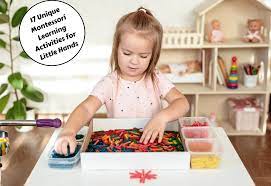
17 Unique Montessori Learning Activities For Little Hands

Introduction:

Montessori learning activities focus on child-centered, hands-on experiences that allow children to explore and learn at their own pace. These activities aim to spark curiosity and encourage independence while fostering a love for learning. Here are 17 unique Montessori learning activities perfect for little hands.

1. Spooning Grains: Teach fine motor skills and hand-eye coordination by having your child transfer grains from one bowl to another using a small spoon.

2. Color Sorting: Encourage early understanding of colors by having your child sort objects like pom-poms, buttons, or colored beads into containers based on their color.

3. Climbing Ramp: Set up a climbing ramp made of wooden planks for your child, to help them build gross motor skills as they climb up and slide down.

4. Stringing Beads: Let your child create a necklace or bracelet by stringing wooden beads onto a soft string or pipe cleaner.

5. Shape Puzzles: Guide your little one in recognizing and matching shapes using wooden shape puzzles with knobs for easy grasping.

6. Tactile Matching: Increase the sense of touch by having your child reach into a bag filled with different textured items and asking them to identify each item without looking.

7. Scooping & Pouring: Offer your child different sized cups or containers, and have them practice scooping and pouring water between containers.

8. Dress Up Activity: Allow your child to try dressing up dolls or stuffed animals using clothing with various fastenings like buttons, snaps, zippers, and shoelaces.

9. Animal Washing Station: Set up a mini-animal washing station with soap, sponges, water, and toy animals to teach practical life skills through sensory play.

10. Art Station: Provide an art station complete with washable paints, crayons, colored pencils, and paper to encourage creativity.

11. Scissor Skills: Using safety scissors, help your child practice cutting along straight lines and patterns.

12. Sink and Float Experiments: Engage the little one in water play while learning about density by testing which objects sink or float in a water-filled container.

13. Baking Together: Involve your child in baking simple recipes and measuring ingredients to help build their math skills.

14. Creating Patterns: Help your child arrange items like blocks, beads, or buttons in assigned patterns to learn pattern recognition.

15. Exploring Tools: Curiosity is key for toddlers, so provide a safe space for exploring tools such as magnets, magnifying glasses, or small plastic tools under adult supervision.

16. Tissue Paper Art: Allow your child to create beautiful collages using tissue paper and glue sticks, working on fine-motor skills as they tear and manipulate the delicate paper.

17. Counting with Clothespins: Give your child opportunities to learn counting by attaching clothespins on the edges of different containers representing various numbers.

Conclusion:

These 17 Montessori learning activities will enhance your little one’s cognitive, physical, and emotional development while keeping them engaged and entertained. By providing hands-on experiences catered to their interests and developmental stage, you will be laying a strong foundation for lifelong learning.

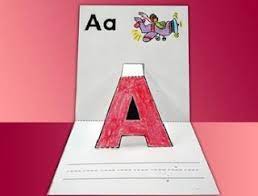
20 Fun Activities to Teach Your Preschoolers the Letter “A”

1. “A” is for Apple: Print out a large letter “A” and have your preschoolers color or paint it in red to resemble an apple. Add a green stem and leaf to complete the activity.

2. Airplane Race: Create paper airplanes using pieces of paper with the letter “A” printed on them. Have your preschoolers race their airplanes while making the “a” sound.

3. Alphabet Soup: Use alphabet-shaped pasta and encourage your preschoolers to find the letter “A” in a bowl filled with letters.

4. Ant Parade: Have your preschoolers draw ants carrying the letter “A” on a piece of paper and create an “ant parade.”

5. Alligator Action: Teach your preschoolers alligator-themed songs or rhymes, emphasizing the letter “A.”

6. Animal Art: Provide images of various animals that start with the letter “A,” such as anteaters, alligators, or alpacas, and have your preschoolers create artwork inspired by these animals.

7. Acorn Adventure: Collect acorns in a park or playground, then use them for counting and sorting activities while focusing on the letter “A.”

8. Alphabet Bingo: Play a game of bingo featuring words that start with the letter “A.”

9. Apron Decorating: Give each child a plain white apron and let them draw or paint pictures of items starting with “A.”

10. Amazing Applesauce: Prepare applesauce with your preschoolers, discussing the process and ingredients, focusing on words starting with “A.”

11. Astronaut Academy: Transform your classroom into an astronaut academy where students don space helmets and learn about space while emphasizing words that start with the letter “A.”

12. Autumn Artwork: Encourage children to create art using fall leaves that represent items starting with “A.”

13. Alphabet Hopscotch: Set up a game of hopscotch outside, only using the letter “A” to encourage recognition and movement.

14. Arrow Accuracy: Use toy bows and arrows to play an aiming game while discussing words associated with the letter “A.”

15. Acting Out: Have your preschoolers act out various actions starting with “A,” such as applauding, arm-wrestling, or aching.

16. Action Songs: Teach action songs featuring words that start with the letter “A,” like Abby the Alligator or Alice the Antelope.

17. Apple Stamps: Cut apples in half and let your preschoolers use them as stamps to create an apple-themed artwork, teaching them that apples start with the letter “A.”

18. A-Maze-ing Adventures: Draw mazes on large sheets of paper, placing items that start with “A” throughout the maze for kids to find as they navigate it.

19. Animate a Movie: Help children create a short stop-motion animated film with clay or toys featuring items starting with the letter “A.”

20. Alphabet Matching: Provide a set of objects that begin with different letters of the alphabet and challenge your preschoolers to find those that start with the letter “A.”

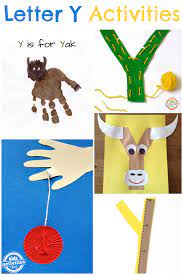
20 Letter “Y” Activities to Make Your Preschoolers Say YAY!

1. Yarn Painting: Provide your preschoolers with yarn, glue, and paper for a fun and messy art project. Encourage them to create the letter Y using the yarn.

2. Y is for Yellow: Have your preschoolers paint or color everything yellow that starts with the letter Y, e.g., yellow yaks or yellow yarn.

3. Yoga for Preschoolers: Teach simple yoga poses that start with the letter Y, such as the “Yogi Squat” or the “Yawning Cat.”

4. Year Round Calendar: Create a visual calendar with your preschoolers that highlights important dates and events throughout the year.

5. Yes or No Game: Develop a lively game where children answer yes or no questions about popular Y words like yo-yos, yaks, and yogurt.

6. Yum-Yum Snacks: Prepare tasty and healthy letter Y snacks like yogurt with fruit or homemade yam chips.

7. Yo-Yo Fun: Provide yo-yos for children to practice their motor skills and coordination.

8. Yak Puppets: Craft charming yak puppets from paper bags and have children put on a puppet show.

9. Y-Shape Hunt: Encourage your preschoolers to search for objects around the classroom that resemble the letter Y in shape.

10. Y-Word Matching Game: Strengthen literacy skills by having your preschoolers match pictures of objects starting with the letter Y to their corresponding words.

11. Yarn Wrapping Activity: Develop fine motor skills by allowing children to wrap yarn around different objects, like sticks or cardboard tubes.

12. Yellow Collage: Create a bright and cheerful collage using only yellow items starting with the letter Y, like yellow yarn and yellow construction paper.

13. Yogurt Painting: Let your preschoolers express their creativity by painting with colored yogurt instead of regular paint.

14. Yarn Weaving: Teach your preschoolers a basic weaving technique with yarn and cardboard.

15. Yarn/String Art: Show your preschoolers how to create designs with nails, yarn, and a wooden surface.

16. Y is for Yo-Yo Coloring Page: Provide printable coloring pages featuring yo-yos and the letter Y for your preschoolers to color.

17. Y-Shape Balance Beam: Challenge your preschoolers’ balance by creating a letter Y-shaped balance beam on the floor with tape.

18. Yahtzee Junior: Introduce your preschoolers to this popular dice game perfect for boosting their counting skills.

19. Yummy Alphabet Soup: Prepare an alphabet soup using alphabet pasta and include several words that start with the letter Y for lunchtime fun.

20. Yogurt Parfait Bar: Set up a healthy and delicious yogurt parfait bar with various toppings like granola, berries, and nuts for a Letter “Y” celebration snack.

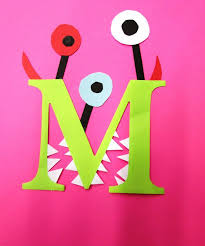
20 Letter M Activities for Preschoolers

Introduction:

Learning the alphabet can be a fun and exciting journey for preschoolers, especially when it comes to discovering new letters and sounds. Letter M is no exception! In this article, we will explore 20 creative and engaging activities that will help young learners master the letter M and its sound.

1. M&M Sorting: Provide children with a handful of M&Ms and have them sort the candies by color while identifying the letter ‘M’ printed on them.

2. Marshmallow Math: Use marshmallows to practice counting, sorting, and simple addition or subtraction problems.

3. Make a Mouse Craft: Create cute mice using construction paper, glue, scissors, and googly eyes.

4. Magnet Painting: Allow children to paint with magnetic paint, then attach magnetic letter M’s to create designs.

5. Matching Game: Print out pairs of pictures that start with the letter ‘M’, such as monkeys, maps, and mittens. Have children match the pictures together.

6. Musical Chairs with Letter M: Play musical chairs using words that start with the letter ‘M’ for music or actions (e.g., march, moo, etc.)

7. Memory Game: Use letter ‘M’ themed cards for a fun Memory game.

8. Mud Play: Let children explore mud and squish it around in their hands while discussing the word ‘mud.’

9. Macaroni Art: Create pictures or patterns using different types of macaroni noodles.

10. Marble Painting: Dip marbles in paint and roll them around on paper to create unique art.

11. Mirror Writing: Have children practice writing the letter ‘M’ on mirrors using dry erase markers or finger paint.

12. Moon Rock Hunt: Hide small items (such as pom poms) around the room and have kids search for “moon rocks” starting with the letter M.

13. Making Masks: Decorate paper or cardboard masks with the lowercase and uppercase letter M.

14. Mailbox Sorting: Create a mailbox and encourage children to sort uppercase and lowercase letter M’s into the correct “mail” slot.

15. Monarch Butterfly Observation: Observe real or fake monarch butterflies while discussing their features that start with the letter ‘M.’

16. Magic Color Mixing: Mix primary colors together to create secondary colors, using the concept of mixing to reinforce the letter ‘M.’

17. Monster-Making: Use play dough to sculpt letter M-inspired monsters together as a fun tactile activity.

18. Masters of Mime: Teach children simple mime exercises, focusing on beginning each action with an ‘M’ word (e.g., march in place, mime eating mints).

19. Map Exploration: Introduce basic map skills by exploring maps of your city, state, or country and highlighting places that start with the letter ‘M.’

20. Marshmallow Structures: Build structures using marshmallows and toothpicks, encouraging children to think about the shape of the letter ‘M.’

Conclusion:

With these 20 engaging Letter M activities for preschoolers, you can help your young learners build essential literacy skills while having fun at the same time. Incorporate these ideas into your lesson plans and watch as your students become more confident in identifying and working with the letter M!

30 Colorfully Crazy Mardi Gras Games, Crafts, and Treats for Kids

Introduction:

Get ready to celebrate Mardi Gras with your kids by indulging in these 30 colorful, crazy and creative games, crafts, and treats. This list will keep them entertained throughout the party and help them create memories that will last a lifetime!

Games:

1. Mardi Gras Mask-Making Contest

2. Treasure Hunt with Doubloons

3. Bead Toss

4. Costume Parade

5. King Cake Walk

6. Mini Float Decorating Competition

7. Purple, Green and Gold Relay Race

8. Jester’s Freeze Dance

9. Balloon Pop Challenge with Mardi Gras Surprises

10. Umbrella Decorating Race

Crafts:

1. DIY Confetti Poppers

2. Glittery Feathered Masks

3. Toilet Paper Roll Jester Hats

4. Beaded Necklaces or Bracelets Making

5. Mardi Gras Slime Creation Station

6. Festive Mardi Gras Shakers (using recycled bottles)

7. Paper Bead Crowns and Tiaras

8. Handprint Parades (using finger paint)

9. DIY Doubloon Coasters (made from tile pieces)

10. Crepe Paper Streamer Wreaths

Treats:

1. King Cake Cupcakes or Miniature King Cakes

2. Crescent Moon Sandwiches with Purple, Green, and Gold Fillings

3. Colorful Popcorn with Edible Glitter

4. Mardi Gras-themed Sugar Cookies

5. Fruity Jambalaya Skewers

6. Beignet Bites with colorful powdered sugar

7. Doubloon Chocolate Coins Wrapped in Foil

8. Carnival Kabobs (fruit skewers with marshmallows)

9. Headerables.odifierandy-Infused Mocktails for Kids

10. Swamp Slushies (green punch with floating candy)

Conclusion:

With these 30 colorfully crazy Mardi Gras games, crafts, and treats, your children’s celebrations will be packed with excitement and creativity. Have fun exploring the vibrant world of Mardi Gras with your little ones and create a party to remember!

22 Bubble Wrap Popping Games for Children of All Ages

Introduction:

Children are always looking for new and exciting ways to play, and bubble wrap is a surprisingly versatile toy that can provide hours of entertainment. Popping bubble wrap is not only fun but also offers sensory stimulation and stress relief for children of all ages. Here, we have compiled a list of 22 bubble wrap popping games that are both engaging and enjoyable.

1. Bubble Wrap Race: Lay a sheet of bubble wrap on the floor and have children race to pop as many bubbles as they can within a certain period.

2. Bubble Wrap Stomp: Encourage children to stomp or jump on large sheets of bubble wrap, seeing who can make the loudest pop.

3. Bubble Wrap Simon Says: Incorporate popping bubbles into a game of Simon Says, having children follow instructions to pop different sizes or colors.

4. Bubble Wrap Painting: Dip bubble wrap in paint and press it onto paper to create unique art.

5. Memory Game: Place small toys or objects under a sheet of bubble wrap and have children guess or memorize their positions before popping the corresponding bubbles.

6. Treasure Hunt: Hide small trinkets within layers of bubble wrap and let kids search for them by popping bubbles.

7. Pop the Letter: Write letters or numbers on sheets of bubble wrap and have children pop them in sequence or according to instructions (e.g., “pop all vowels”).

8. Shape Matching: Cut out various shapes from bubble wrap sheets and ask children to match them with corresponding shapes drawn on paper.

9. Musical Bubbles: Play music while children jump or dance on bubble wrap, stopping when the music stops.

10. Sensory Walk: Create a sensory path using different types of bubble wrap for kids to walk or crawl on barefoot, experiencing varying textures and sounds.

11. Target Practice: Set up targets around the room and have children throw soft objects to pop bubbles on the targets.

12. Pop-and-Clap: Kids can pop a bubble and clap simultaneously, developing hand-eye coordination.

13. Bubble Wrap Hopscotch: Set up a traditional hopscotch grid using bubble wrap for a noisy twist.

14. Blindfolded Popping: Blindfold children and have them pop bubbles while relying solely on touch and hearing.

15. Bubble Wrap Maze: Design a maze using strips of bubble wrap and have kids navigate it by following the popping sounds.

16. Group Popping Challenge: Divide children into teams and race to pop all the bubbles on their team’s sheet.

17. Pop the Syllables: Write common words on bubble wrap and have kids practice syllable division by popping bubbles in line with each syllable break.

18. Bubble Wrap Twister: Adapt the Twister game to be played on a large sheet of bubble wrap, switching colors with bubble sizes or similar features.

19. Pass the Bubble Wrap Parcel: Wrap small gifts with layers of bubble wrap and pass them around while music plays, having children take turns popping a layer when the music stops.

20. Protect the Bubbles: While one child holds a piece of bubble wrap, another child tries to pop as many bubbles as they can within a limited timeframe.

21. Hula Hoop Bubbles: Attach strips of bubble wrap to hula hoops for an additional sensory experience while they play with hula hoops.

22. Quiet Footsteps: Lay out sheets of bubble wrap and challenge kids to walk across without making noise, helping them develop their motor skills while engaging in stealthy play.

Conclusion:

These 22 bubble wrap popping games are just the beginning of endless fun your children can have with this versatile material.