Pedagogue Blog

Teachers Are Sharing All the Times They’ve Felt “Seen” by Their Students

Introduction:

Teaching is a noble profession that shapes and facilitates the growth of young minds. But, teachers are only human and often need a reminder that their efforts are noticed and appreciated. In this article, we will explore heartwarming stories shared by teachers who had moments where they genuinely felt seen by their students.

The Small Gestures That Count:

– An art teacher received a heartfelt drawing from one of her students. The young artist drew herself and her teacher working together on a project, expressing gratitude for the support she had received. The note made the teacher feel incredibly seen and valued, as it showed that her work was making an impact.

– A math teacher found an anonymous note slipped in her desk drawer. In neatly-written letters, it read, “Thank you for being so patient with me when I’m struggling.” Those few words were enough to brighten the teacher’s day.

Recognition Goes a Long Way:

– A science teacher who had been feeling particularly underappreciated was moved to tears when she found out that her class had secretly nominated her for an upcoming teaching award. The students had taken the time to write letters explaining why they believed she deserved the honor.

– During parent-teacher conferences, one couple revealed to their son’s history teacher that their family conversations often revolved around his lessons. It meant a lot to know that her classes did not just extend to school hours but continued at home as well.

Returning the Favor:

– After losing everything in a house fire, one music teacher returned to the classroom weeks later, only to find it filled with new instruments and sheet music purchased by his students through a fundraiser organized by them. This incredibly thoughtful gesture reminded him that he was not alone.

– A group of high school students got together to write thank-you letters on behalf of the entire grade for their English teacher, who was leaving the school. Through this gesture, they acknowledged her dedication and wished her all the best for the next chapter of her life.

Surprise Birthday Parties:

– One fifth-grade teacher arrived at school on her birthday, expecting a typical day, only to walk into a room filled with balloons and decorations prepared by her students. This thoughtful surprise reminded her that her impact on their lives went beyond academics alone.

– Another teacher had a similar experience when she walked into the staff lounge to find her favorite cake brought in by one of her students. The student had remembered the cake from a casual conversation months earlier.

Conclusion:

These heartwarming stories remind us that educators play crucial roles in their students’ lives and that, sometimes, even they need reassurance of their impact. As these teachers discovered that their students noticed their efforts and went out of their way to express gratitude, it reinforced their sense of purpose and provided the motivation needed to continue their important work.

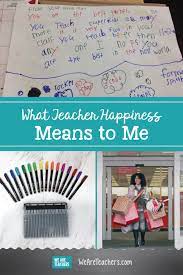
What Teacher Happiness Means to Me

Introduction:

Teaching is a noble profession that plays a pivotal role in shaping the future of our society. One crucial element necessary for the effective imparting of knowledge is the happiness and satisfaction of teachers. Teacher happiness is a subject close to my heart, as it directly impacts the educational experience and overall success of students. In this article, I will discuss what teacher happiness means to me and how it contributes to a healthy educational environment.

Body:

To begin with, teacher happiness is synonymous with job satisfaction. When educators take pride in their work and feel that their efforts are valued, their sense of happiness and well-being rises. Teaching can be an incredibly rewarding profession, and when teachers recognize their impact on students’ lives, their passion for education blossoms further.

For me, teacher happiness also means personal autonomy. Educators must feel empowered to make decisions in regards to their teaching methods and classroom management style. A sense of control over one’s work environment allows for greater creativity and innovation in lesson planning, which ultimately benefits students.

Additionally, teacher happiness signifies supportive working conditions. This includes adequate resources and facilities to enable effective teaching, as well as collaboration among staff members. When educators have access to appropriate materials, feel supported by their school administration, and enjoy camaraderie with their co-workers, it fosters an atmosphere conducive to efficient learning.

Another important aspect of teacher happiness is professional growth opportunities. Continuous learning is vital for both personal and professional development. Providing teachers with avenues for further education, training programs or conferences not only enhances their skills but also renews their enthusiasm for the profession.

Lastly, teacher happiness equates to being valued and respected by society at large. Educators play a critical role in shaping our youth, yet they often remain underappreciated or undervalued both financially and emotionally. Ensuring that teachers are recognized for their hard work and commitment is integral to their overall happiness and job satisfaction.

Conclusion:

In conclusion, what teacher happiness means to me is a combination of factors, including a sense of purpose, autonomy, support from the school community, opportunities for professional growth, and societal appreciation. Creating an environment that nurtures teachers’ well-being is essential for the success of our educational system. A happy teacher equates to engaged students, which ultimately leads to a brighter future for all.

Predicts – These Will Be The Biggest Issues In Education This Year

Introduction:

As a new year unfolds, the education sector continues to face numerous challenges and opportunities. In this article, we take a look at the predicted biggest issues in education for this year. Educators, administrators, and policymakers must tackle these issues head-on to ensure an effective and equitable learning experience for students.

1. Addressing Learning Loss Due to COVID-19

Remote learning has highlighted the digital divide, creating gaps in student learning experiences. This was largely due to unequal access to technology, resources, and conducive learning environments. Schools must prioritize addressing these gaps and minimize learning loss for a more equitable education system.

2. Mental Health Focus

The pandemic has taken a toll on mental health globally, and students are no exception. The school system should shift their focus on promoting mental wellness by providing comprehensive support services and integrating social-emotional learning (SEL) into the curriculum to help students cope with stress and anxiety.

3. Digital Transformation in Education

School systems must continue adapting to the digital age by investing in new technologies to facilitate remote and hybrid learning models. Additionally, teachers need professional development opportunities to better integrate technology into lesson plans effectively.

4. Personalized Learning Experiences

Tailoring educational experiences for each student is crucial for ensuring their success in the classroom and beyond. Schools should utilize technology and data-driven strategies for personalized instruction that meets individual needs, abilities, and interests.

5. Heightened Focus on Diversity, Equity, and Inclusion

Educational institutions need to prioritize diversity, equity, and inclusion through culturally-responsive teaching practices and inclusive learning environments that cater to students from all backgrounds.

6. Teacher Shortages

As educators face increasing work pressures during remote learning, teacher shortages have grown exponentially across countries. Governments must prioritize solutions around recruitment, retention of teachers while improving working conditions within schools.

7. Reevaluating Assessment Systems

The pandemic has displaced traditional end-of-year exams, raising questions about the accuracy and validity of standardized assessments. There is a growing need to develop a robust and nuanced assessment system that accurately illustrates students’ knowledge, skills, and potentials.

Conclusion:

Thenarrative for this year’s biggest education issues encompasses various dimensions of the learning experience. While tackling these challenges may seem daunting, a collaborative approach by educators, policymakers, and administrators worldwide is essential for the collective success of educational institutions and their students in the coming years.

We’re Talking About the Wrong Education Gap

Introduction:

The education gap is a term regularly discussed in political and educational settings. While most people refer to the achievement gap based on socioeconomic, ethnic, and other factors that influence access to quality education, the discussion has largely overlooked a vital aspect of the problem. This article shifts the focus to explore this often-neglected dimension of educational disparity and explains why acknowledging and addressing it is crucial.

Misguided Conversations Surrounding the Education Gap:

Education policies and programs are frequently designed to target achievement gaps between high-achieving and low-achieving students. These differences usually stem from socioeconomic factors or geographic location that either provide access to more educational resources or hinder it. However, a more nuanced conversation is needed for policymakers and educators to understand that there is more lurking in the shadow of these disparities than meets the eye.

The Bigger Picture: The Skills Gap

One significant area that deserves our attention is the “skills gap.” The skills gap refers to the disconnect between what students learn in school and what employers demand in terms of skills for available jobs. It’s essential to recognize that bridging this gap contributes significantly towards reducing unemployment or underemployment rates while bolstering economic growth.

Causes of the Skills Gap:

A few factors contribute to this gap:

1. Education System – Traditional education systems may not update curriculum in sync with industry demands, leaving students ill-prepared for the job market.

2. Lack of Vocational Training – Limited access to vocational training translates into fewer students who have skills relevant to specific industries.

3. Misalignment between Employers and Educators – Poor communication between employers and educators can lead to mismatches in skill sets being taught versus what industries require.

4. Tackling this crucial issue requires a collective effort from various stakeholders – students, parents, educators, policymakers, and employers alike.

Potential Solutions for Bridging the Skills Gap:

Implementing the following strategies can help in narrowing the skills gap:

1. Encourage Public-Private Partnerships – Engaging stakeholders from both educational institutions and industries can help in updating the curriculum and implementing practical training effectively.

2. Boost Vocational Education – Increasing access to vocational training programs, apprenticeships, and internships provides hands-on industry experience and focuses on developing specific skill sets.

3. Implement Soft Skills Training – Integrating soft skills training within the education system can prepare students for the challenges they’ll encounter in their careers.

4. Continuous Learning Initiatives – Promoting a culture of continuous learning, upskilling, and professional development can keep students and employees in tune with evolving industry demands.

Conclusion:

The current discussions revolving around the education gap are overly focused on traditional factors such as income, race, and neighborhood characteristics. We need to shift our conversations to include the more pressing issue of the skills gap and actively work towards targeted solutions that will benefit both students and employers in the long run. By identifying and addressing these gaps more holistically, we can better match talent with opportunity to create a stronger, more resilient workforce ready to meet ever-changing industry demands.

A Green Screen Is the Tech Tool You Didn’t Know You Needed

In today’s fast-paced digital world, technology enthusiasts and media professionals are always searching for innovative ways to create dynamic content. One such game-changing tech tool you may not have realized you needed is the green screen. Also known as chroma keying, green screen technology allows creators to composite different moving images or special effects to produce visually striking results

But what makes a green screen so valuable, and how can it benefit your creative projects? Let’s explore the potential of this often underappreciated yet powerful technology.

1. Seamless Image Compositing

The primary advantage of green screen technology lies in its ability to blend together different layers of visuals seamlessly. By using a distinct color (usually a bright shade of green) as a backdrop, content creators can easily remove the green background from footage and replace it with another visual element. This technique is widely utilized in television, movies, and even live stream applications.

2. Enhancing Production Value

The impact a green screen has on your projects’ production value shouldn’t be underestimated. By incorporating chroma keying into your toolbox, you can virtually transport your subjects to exotic locales, place them within intricate digital environments, or simulate elaborate fantasy worlds—all without ever leaving your studio.

3. Resource Efficiency

Green screens save both time and resources by preventing unnecessary location scouting, permitting historical reenactments or other hard-to-produce scenes within limited budgets. Additionally, post-production processes become simpler and quicker with the proper utilization of green screens.

4. Live Streaming Benefits

In recent years, live streaming has become an increasingly popular method for content creators to interact with their audiences in real-time. The use of green screens during live streams allows for professional image composition that instantly elevates production quality while simultaneously engaging viewers.

5. Versatile Applications

Lastly, once you’ve mastered working with a green screen, the possibilities are endless. Whether you’re working on a short film, creating engaging marketing content, or producing educational videos, chroma keying technology can help make your work stand out. Practical applications span across various industries, including entertainment, education, and advertising.

In conclusion, the green screen is an essential tech tool that often gets overlooked but remains crucial in today’s digital world. Through seamless image compositing, enhanced production value, resource efficiency, and versatile applications across various domains—it’s time to rethink what a green screen can bring to your creative projects. Once you start using it to its full potential, you’ll wonder how you ever managed without it.

Literary Sidekicks That Can Help Us All Be Better Teachers

Introduction

Literary sidekicks have charmed us, engaged us, and on occasion, even made us more inquisitive about the primary characters. Instructors can draw motivation from these endearing figures to educate as well as engage their students. This article highlights some of these literary sidekicks and how their attributes can help educators become better teachers.

1. Samwise Gamgee from The Lord of the Rings

Sam is the epitome of loyalty, dedication, and support. He accompanies Frodo on a perilous journey to destroy the One Ring and never leaves his master’s side. Teachers can learn from Sam’s unwavering commitment, as they too need to be loyal and dedicate themselves to helping their students reach their full potential.

Lesson: Loyalty and dedication towards students.

2. Dr. John Watson from Sherlock Holmes stories

Dr. Watson serves as both a sidekick and chronicler of Sherlock’s adventures, which demonstrates the importance of collaboration in problem-solving tasks. As a teacher, one must collaborate with students to help them overcome learning obstacles and foster curiosity.

Lesson: Collaboration in problem-solving.

3. Hermione Granger from Harry Potter series

Arguably one of the most iconic sidekicks in literature, Hermione’s intelligence and resourcefulness bring an added layer of depth to Harry’s journey. She constantly encourages her peers to learn more and expand their horizons. Teachers can model this enthusiasm for learning and inspire their students to remain curious, no matter the circumstances they face.

Lesson: Enthusiasm for learning.

4. Sancho Panza from Don Quixote

As a wise character that offers comic relief in otherwise serious situations, Sancho Panza helps ground Don Quixote back into reality with his simple common sense wisdom. Educators can adopt this practical approach by breaking down complex concepts into simple terms that cater to each individual student’s level of understanding.

Lesson: Simplifying complex concepts.

5. Piggy from Lord of the Flies

Piggy symbolizes rational thought among the group of boys stranded on the island. He continuously reminds them of the importance of cooperation and order, vital qualities all teachers must uphold to maintain class discipline and establish a comfortable learning atmosphere.

Lesson: Importance of cooperation and classroom discipline.

Conclusion

Literary sidekicks encompass a range of attributes that make a story engaging and memorable. As educators, we can benefit from studying these characters to nurture a classroom environment that encourages creativity, critical thinking, and cooperative learning. By adopting the qualities exemplified by these beloved literary sidekicks, teachers can inspire students to reach their full potential and enjoy every step of their educational journey.

5 Inspired Ways to Use Social Media as a Teaching Tool

In today’s digital age, social media has become an integral part of our daily lives. There are over 3 billion users worldwide, making it an incredibly popular and powerful platform for communication and sharing information. As a result, educators have begun to explore the potential benefits of using social media as a teaching tool, both for in-person and online learning. Here are five inspired ways to use social media in the classroom:

1. Encourage collaboration through group discussions

Platforms like Facebook Groups offer an excellent space for students and teachers to engage in ongoing discussions on course materials, share relevant links, and collaborate on group projects. By fostering a sense of community outside the classroom, these groups can help students feel more connected to their peers and invested in one another’s success.

2. Utilize Twitter for real-time learning opportunities

Twitter is known for being a real-time platform where news breaks and trends emerge quickly. Teachers can use this platform to monitor current events that tie into their subject matter, engage students in discussions around these events, or even follow influential people in their field of study. Having students actively participate in topic-related conversations can greatly enhance the learning experience by providing fresh perspectives and strengthening critical thinking skills.

3. Share educational resources on Pinterest

Pinterest is a visual discovery tool that allows users to organize articles, videos, images, and other resources into virtual pinboards or ‘boards.’ Teachers can create topic-specific boards where they share essential resources with students or even encourage students to collaborate on boards by adding their own relevant findings.

4. Create classroom YouTube channels for student presentations

Video presentations are an effective way for students to demonstrate their understanding of a topic or express their creativity. Creating a classroom YouTube channel allows teachers to showcase student videos while also enabling other students to comment on each other’s work and learn about different perspectives.

5. Leverage Instagram to showcase student achievements

Many students value recognition for their hard work and achievements. Teachers can create Instagram profiles to showcase student accomplishments, such as exemplary essays, artwork, or even improvement in specific areas. Additionally, they could feature students’ behind-the-scenes glimpses into the learning process or highlight the classroom environment to establish a sense of pride and identity among the class.

In conclusion, social media networks offer a variety of opportunities to supplement and expand teaching methods in the classroom. By employing these innovative strategies, educators can foster creativity, facilitate collaboration, and enhance student engagement both inside and outside the traditional learning environment.

4 Ways to Use iPads in Kindergarten

In recent years, iPads have become a valuable tool in the field of education, making their way into classrooms across the world. When implemented correctly, they can provide interactive and engaging experiences for students, especially in kindergarten. Here are four innovative ways to incorporate iPads into your kindergarten curriculum.

1. Interactive Storytelling

One of the most effective ways to use iPads in kindergarten is through interactive storytelling apps. These apps provide a unique blend of visual and auditory elements, presenting stories to children in an engaging manner. With animated illustrations, voiceovers, and sound effects accompanying the text, interactive storytelling helps bring stories to life. Teachers can select age-appropriate story apps that align with their curriculum objectives and captivate the imagination of young learners while improving their reading skills.

2. Educational Games

Another way to utilize iPads in kindergarten is by exploring educational games developed specifically for this age group. With a wide range of subjects available such as math, language, science, and even social skills development, there are numerous options for teachers to choose from based on their lesson plans. These games provide children with an enjoyable outlet to practice essential skills and tackle new concepts at their own pace. Moreover, educational games often feature progress reports that allow educators to track students’ progress and identify areas requiring improvement.

3. Art and Creativity

iPads also offer a plethora of art applications that cater to young learners’ creative instincts. From drawing and painting apps to digital collage makers, these platforms allow children to experiment with colors, textures, shapes, and various tools without creating a mess or wasting resources. This use of technology not only fosters creativity but also aids in fine motor skill development as well as hand-eye coordination.

4. Virtual Field Trips

Another exciting way to bring technology into the classroom is by embarking on virtual field trips using iPads. Thanks to advances in augmented reality and virtual reality, students can now explore distant locations or environments without leaving their classrooms. This immersive experience enables a deeper understanding of the world around them, be it topical subjects like historical landmarks or wildlife habitats. Integrating global experiences can complement a geography or history lesson in a captivating and innovative way.

In conclusion, iPads possess the potential to transform learning experiences for kindergarten students in various ways. By incorporating interactive storytelling, educational games, art applications, and virtual field trips into your curriculum, you can create an enriched and versatile learning environment. With proper supervision and responsible use of technology, the possibilities are endless for young minds to grow and aspire in this digital age.

12 Teacher-Approved Computer Mice for K-12 Students

Introduction:

As technology becomes an integral part of education, it’s essential to ensure that K-12 students have access to reliable and age-appropriate computer peripherals like mice. We’ve compiled a list of 12 teacher-approved computer mice that cater to the varying needs and preferences of students in different age groups.

1. Logitech M325 Wireless Mouse

This ambidextrous mouse is perfect for younger students with its small and comfortable design. The scroll wheel allows easy navigation through documents and websites, while its wireless feature ensures clutter-free workspaces.

2. Microsoft Basic Optical Mouse

Microsoft’s simple yet sturdy optical mouse provides a comfortable grip and smooth performance. Its wired design makes it easy to set up and an ideal choice for classrooms on a budget.

3. Jelly Comb 2.4G Slim Wireless Mouse

With its sleek design and multiple color options, this wireless mouse is an attractive option for students who prefer a touch of personalization. It offers smooth movement, high precision, and a quiet clicking sound perfect for shared learning spaces.

4. Contour Unimouse

Recommended for middle school students, this adjustable mouse caters to various hand sizes and grip styles. The built-in DPI button allows users to change cursor speed easily, enhancing user experience.

5. HP X3000 Wireless Mouse

This versatile wireless mouse has a contoured shape that’s suitable for both left-handed and right-handed users. Its different color options cater to individual preferences, making it popular among students.

6. Dell MS116 Optical Mouse

With its straightforward design, the Dell MS116 offers dependable performance in a wide range of educational settings, from computer labs to classrooms.

7. Anker Ergonomic Optical USB Wired Mouse

For older students experiencing wrist discomfort, this ergonomic mouse helps relieve pressure with its vertical design that encourages a more natural hand posture.

8. Razer DeathAdder Essential

With programmable buttons, this gaming mouse is not only perfect for high school students who enjoy video games but also those who require easy access to specific functions for productivity apps and coding projects.

9. VicTsing MM057 Wireless Mouse

This budget-friendly wireless mouse offers incredible value with its five DPI levels, allowing students to personalize cursor speed to suit their preferences.

10. Apple Magic Mouse 2

A popular choice for Mac-based classrooms, Apple’s Magic Mouse 2 provides seamless Bluetooth connectivity and multi-touch functionality for easy navigation through various applications.

11. Logitech G203 Lightsync

This wired gaming mouse is an excellent option for older students due to its advanced sensor technology that delivers precise cursor movement. It also includes customizable RGB lighting that adds a touch of flair.

12. Penclic B3 Mouse

The unique pen-like design of the Penclic B3 encourages a more relaxed grip, reducing the risk of repetitive strain injuries. The wireless connection makes it ideal for both individual and collaborative learning environments.

Conclusion:

By selecting from our list of 12 teacher-approved computer mice, educators can enhance the computer experience for K-12 students by providing them with comfortable and functional options tailored to their age group and learning preferences.

These 10 American Literature Classics Still Belong on Your Syllabus

Introduction:

There are certain books that have earned themselves a permanent place on literature enthusiasts’ shelves and educators’ syllabi across the globe. The following ten American literature classics still possess significant relevance in today’s world and continue to leave a lasting impression on readers of all ages.

1. To Kill a Mockingbird by Harper Lee (1960)

This timeless novel explores themes such as racism, prejudice, and moral growth through the eyes of a young child in the Deep South.

2. The Great Gatsby by F. Scott Fitzgerald (1925)

Fitzgerald’s masterpiece offers a glimpse into the decadence, ambition, and shattered ideals of the Jazz Age while serving as an exploration of identity, class, and materialism.

3. Moby-Dick by Herman Melville (1851)

This epic tale of one man’s obsessive quest to hunt down an elusive and legendary white whale is a intricate allegory for the human condition, nature’s power, and the depths of the human spirit.

4. The Scarlet Letter by Nathaniel Hawthorne (1850)

Hawthorne’s gothic romance delves into the themes of guilt, repentance, and personal identity as it follows Hester Prynne after she is branded with a red letter “A” for her act of adultery.

5. Adventures of Huckleberry Finn by Mark Twain (1884)

Widely regarded as a great American masterpiece, Mark Twain’s novel follows the journey of Huck Finn and his friend Jim down the Mississippi River as they learn about friendship, freedom, and societal hypocrisy.

6. The Catcher in the Rye by J.D. Salinger (1951)

Salinger’s coming-of-age novel fascinates generations with its poignant portrayal of teenage angst, rebellion, alienation, and disillusionment as experienced by the protagonist, Holden Caulfield.

7. The Grapes of Wrath by John Steinbeck (1939)

This heart-wrenching saga tells the story of the Joad family during the Great Depression and their quest to find a better life in California, ultimately revealing the resilience and strength of the human spirit in face of adversity.

8. The Crucible by Arthur Miller (1953)

Miller’s play serves as a powerful parable about mass hysteria and the dangers of extremism through its dramatization of historical Salem witch trials, reflecting its contemporary context of McCarthyism in 1950s America.

9. Invisible Man by Ralph Ellison (1952)

This groundbreaking novel addresses complex issues related to race, identity, and personal discovery while exploring different aspects of Black American experience in the 20th century.

10. Their Eyes Were Watching God by Zora Neale Hurston (1937)

Hurston’s classic work is a testament to personal strength and self-identity as it follows Janie Crawford on her journey through multiple marriages, hardships, and ultimately self-discovery.

Conclusion:

These ten American literature classics defy the passage of time by remaining relevant to modern society. Whether you are an educator crafting your syllabus or an avid reader seeking thought-provoking novels, these powerful works should undoubtedly have a place on your bookshelf.

Teachers Are Sharing the Most Insulting Icebreakers They’ve Been Forced to Do

Introduction

In the world of education, teachers are often tasked with creating a fun and engaging atmosphere for their students. Amongst the many methods used to achieve this goal are icebreakers. Unfortunately, not all icebreakers are created equal, and some can even be quite insulting or condescending. Teachers from around the globe are sharing their experiences with the most offensive icebreakers that they have been forced to do.

1. The “Baby Photo Guess-Who”

One teacher described a particularly cringe-worthy icebreaker where all faculty members were asked to bring in a baby photo of themselves. These photos were then mixed up and displayed for everyone to guess which photo belonged to whom. Not only did this lead to uncomfortable conversations about changed physical appearances, but it also left some feeling judged based on their looks.

2. “Two Truths and a Lie”

This common icebreaker involves participants sharing two true statements about themselves and one lie. Others then attempt to guess which statement is false. While meant as a lighthearted activity, some teachers found that statements made by their colleagues revealed inappropriate personal details or fueled office gossip.

3. Forced Dancing

One teacher recalled an icebreaker where all staff members were required to dance in front of their peers without any musical accompaniment. While this activity might work well with an enthusiastic group of friends, forcing coworkers into such an awkward display can feel humiliating and lead to unnecessary embarrassment.

4. “Worst Teacher Experience”

An educator mentioned an unfortunate activity where teachers were asked to share their most challenging or embarrassing experiences in the classroom. Instead of promoting camaraderie, this exercise caused some participants to feel judged and ridiculed by their peers.

5. Personality Tests

Another teacher shared an icebreaker in which faculty members were asked to take a personality quiz in front of their colleagues. The results were then shared and discussed, forcing some participants to confront aspects of their personalities that they would rather have kept private.

Conclusion

While icebreakers can be an effective way to create a lively atmosphere and build rapport among teachers and students, it is crucial to consider the feelings and comfort levels of the participants. Instead of forcing individuals into embarrassing or invasive activities, more constructive alternatives should be embraced. After all, fostering strong relationships and collaboration among educators is essential for a successful educational environment.

The Impact of Nicknames in Education

Introduction: As educators, we often encounter students from diverse backgrounds with names that might be challenging to pronounce. In some cases, teachers come up with nicknames for these students. But is this really the right solution? In this article, we will explore the potential impact of nicknames on young students and their sense of identity.

The Importance of Names: Names are more than just labels; they are an essential part of one’s culture and identity. Names reflect our roots and represent our personal history. By mispronouncing or shortening a student’s name, we risk eroding their cultural background and undermining their confidence.

The Impact on Students: When an educator fails to pronounce a student’s name correctly or resorts to using a nickname, it may send a message to the student that their identity is not important or respected. This can lead to self-consciousness and alienation, affecting the student’s social relationships and engagement with peers. They may feel less inclined to participate in class activities and risk academic decline.

Emphasizing Inclusivity: Respect and inclusivity are foundations for building a nurturing environment in educational institutions. By taking time to learn about students’ names and their meanings, educators promote diversity and foster cultural awareness. Students feel a sense of belonging when their personal identities are valued.

Building Connections: Embracing the challenge of learning to pronounce unfamiliar names can provide opportunities for both educators and students to connect on a deeper level. Sharing stories about names can help build cross-cultural understanding, encourage empathy, and promote meaningful relationships within the classroom.

Alternative Approaches: Educators should consider alternatives before resorting to using nicknames for students. Some strategies include:

1. Asking the student or family for help with pronunciation.

2. Using audio recordings to practice pronunciation.

3. Collaborating with colleagues who share a similar cultural background with the student.

4. Encouraging students to correct any mispronunciations immediately.

The Right to Choose: Ultimately, giving a nickname should be a choice made by the student in consultation with their family. This empowers the student and strengthens their voice in shaping their identity within the classroom.

Conclusion: The seemingly innocuous act of using a nickname for a hard-to-pronounce name can have lasting effects on a student’s self-esteem and cultural identity. By investing time and effort into learning and respecting students’ names, educators send a powerful message that diversity is valued, fostering an inclusive environment that benefits all students.

Latest Posts