EdTech & Innovation

9 Best Printers for Teachers To Use in The Classroom

As a teacher, you often need to print handouts, worksheets, and tests for your students. Quality and efficiency are vital when it comes to selecting the best printer for classroom use. To help you make an informed decision, we’ve compiled a list of the top 9 printers for teachers to use in the classroom.

1.HP OfficeJet Pro 9015

The HP OfficeJet Pro 9015 is a versatile all-in-one printer that offers fast printing speeds and high-quality output. It has wireless connectivity options, allowing you to easily print from your smartphone or tablet. The automatic document feeder and two-sided printing make it convenient for teachers who need to quickly produce multiple copies of documents.

2.Canon PIXMA TR4520

The Canon PIXMA TR4520 is an affordable and compact printer that offers impressive features, such as wireless connectivity and automatic duplex printing. Its built-in Wi-Fi allows for seamless integration with mobile devices and cloud services, making it easy for teachers to access their files and print on demand.

3.Epson WorkForce WF-7720

This wide-format printer offers high-quality prints, scans, copies, and faxes up to 13 x 19 inches in size. The Epson WorkForce WF-7720’s precision core technology ensures sharp text and vibrant images on various paper types, making it perfect for creating presentation materials and posters.

4.Brother HL-L2300D

For teachers seeking a reliable monochrome laser printer, the Brother HL-L2300D delivers fast printing speeds of up to 27 pages per minute. Its compact design saves space on your desk while the high-yield toner cartridges help reduce printing costs over time.

5.Dell E310dw

The Dell E310dw offers simplicity and efficiency with its easy-to-use interface and wireless connectivity options. This monochrome laser printer supports duplex printing and has a 250-sheet paper capacity, making it ideal for teachers who need to print large quantities of text-heavy documents.

6.HP ENVY 6055

A versatile all-in-one printer, the HP ENVY 6055 is well-suited for classroom needs due to its wireless capabilities, two-sided printing, and high-quality output. Its sleek design allows it to fit comfortably in limited spaces, and the intuitive touchscreen makes navigating through options effortless.

7.Canon imageCLASS LBP6230dw

With fast printing speeds and wireless connectivity, the Canon imageCLASS LBP6230dw is an excellent choice for teachers who require a monochrome laser printer with efficient performance. The compact design saves space without compromising on quality or speed.

8.Epson EcoTank ET-3760

As an economical and environmentally friendly option, Epson EcoTank ET-3760 offers cartridge-free printing with easily refillable ink tanks. This all-in-one printer eliminates the need for frequent replacements of cartridges, reducing long-term costs and waste.

9.Brother MFC-L2710DW

For high-volume printing needs in the classroom, the Brother MFC-L2710DW is a reliable monochrome laser printer with a range of convenient features, including wireless connectivity, two-sided printing, scanning, copying, and faxing.

In conclusion, selecting the right printer for your classroom depends on your specific needs. Always consider factors such as speed, print quality, connectivity options, and cost-effectiveness when choosing a printer to ensure you find the perfect match for you and your students.

 

20 Perfect Pocket Chart Activities for Interactive Learning

Introduction:

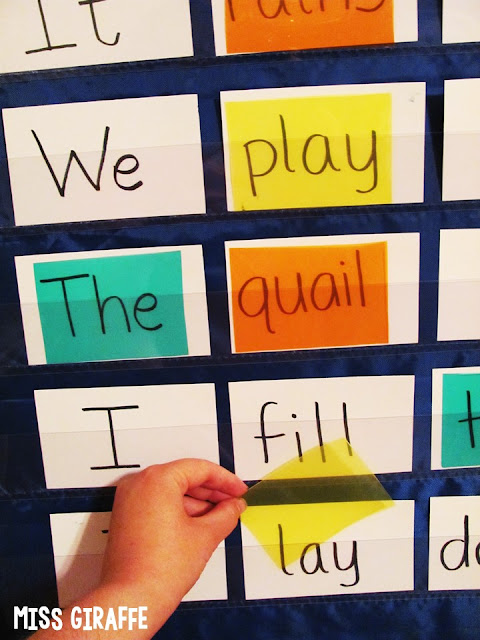
Pocket charts are a versatile and interactive tool that can be used in classrooms or homes to engage children in hands-on learning activities. They come in various shapes and sizes, and they can accommodate cards, pictures, sentences, or other learning aids. Here are 20 perfect pocket chart activities that will spark creativity and make the learning experience fun for all ages.

1. Sorting Words by Theme :  Create cards with various vocabulary words on them and have the students sort them based on a chosen theme like animals, fruits, or occupations.

2. Building Sentences: Provide children with separate word cards and let them construct meaningful sentences using the pocket chart as their workspace.

3. Time-Telling Practice: Display different clock faces along with the corresponding time cards to help children learn how to tell time.

4. Number Sequences: Place number cards on the pocket chart and ask learners to fill in the gaps by adding missing numbers to complete the sequences.

5. Sight Word Recognition: Write sight words on cards and have students match them with corresponding picture cards for visual reinforcement.

6. Alphabet Matching: Arrange alphabetical letter cards onto the pocket chart along with picture clues that showcase objects beginning with that letter.

7. Word Families: Teach various word families by placing root words onto pocket charts, followed by suffixes or prefixes for students to build new words.

8. Calendar Skills: Create a monthly calendar using pocket charts to teach days of the week, months, numbering, and basic scheduling concepts.

9. Scientific Classification: Students can sort animals, plants, or other organisms based on their scientific categories such as mammals, reptiles, insects, etc.

10. Math Facts Practice: Write math problems on one side of card inserts and answers on another for quick self-quizzing practice of addition, subtraction, multiplication, or division facts.

11. Story Sequencing: Print out story scenes onto cards and have the learners arrange them in the correct order to practice their storytelling skills.

12. Rhyming Words: Write down words on cards that rhyme, place them into the pocket chart, and have kids pair them up based on the rhyming pattern.

13. Color Sorting: Provide cards with various colors and child-friendly shapes or objects for learners to sort and categorize based on color.

14. Emotion Recognition: Use emotion picture cards for kids to learn about feelings and emotions by matching facial expressions with emotive words.

15. Anagram Challenge: Place scrambled word cards into the pocket chart and encourage children to unscramble them into correct words.

16. Vocabulary Expansion: Teach new vocabulary words using pocket charts by organizing them into categories, such as space, weather, food, etc., for students to familiarize themselves with new terms.

17. Bar Graphs: Utilize a customizable pocket chart to represent data visually as bar graphs so children can analyze information easily.

18. Punctuation Practice: Present sentences without punctuation marks and ask children to insert appropriate punctuation cards at the correct positions.

19. Geography Lesson: Display world maps with labels written on separate cards for students to match countries, capitals or landmarks correctly.

20. Musical Notes: Teach basic music theory using a blank staff line pocket chart and musical note card inserts, perfect for budding musicians.

Conclusion:

With these 20 pocket chart activities, classrooms and homes become stimulating learning environments filled with interactive tasks that support cognitive development. The versatility of pocket charts allows teachers and parents to tailor activities specifically for each child’s learning needs – making education engaging, fun, and effective.

Are You Getting the Best Value from Your ICT Provision?

Introduction

In today’s fast-paced, digital world, Information and Communication Technology (ICT) has become a vital tool for organizations to run their businesses efficiently. Regardless of an organization’s size or industry, investing in the right ICT provisions helps improve operations and leverage emerging technologies to stay competitive. But how do you ensure that you are getting the best value from your ICT provisions? Here’s a comprehensive guide to help you make that assessment.

Understanding the Value of Your ICT Provisions

1. Price versus Quality: It’s crucial to evaluate whether the investment in your ICT infrastructure aligns with your business’s goals and needs. How much are you spending on equipment or subscriptions, and does this spending justify the value it brings in terms of productivity, efficiency, and competitive advantage? Striking the right balance between cost and quality will ensure maximum return on investment.

2. Reliability: Consistent performance is critical when it comes to ICT provisions. Evaluate if your ICT systems can withstand downtime or failure without causing significant disruptions to your operations. This may include assessing redundancy, failover options, and maintenance agreements with solution providers.

3. Scalability: As your business grows, so too should your ICT capabilities. Determine whether your current infrastructure can easily accommodate future growth and expansion without requiring significant overhauls or additional investments.

4. Integrations: Seamless integration with existing tools and software is crucial to maximize value from new IT investments. Ensure that your ICT provisions support compatibility with popular enterprise applications or allow custom integration where necessary.

5. Security: In an age of increasing cyber threats, protecting company data should be a top priority when choosing an ICT provision. Assess whether safeguards like encryption, firewalls, anti-malware solutions, and regular security updates are included in the package to ensure data safety.

Assessing Your Current ICT Setup

To get a holistic understanding of whether you are receiving the best value from your ICT provisions, perform a detailed assessment of your current IT infrastructure. This includes:

1. Inventory: Documenting and evaluating the IT assets your organization employs, such as hardware, software licenses, and communication tools.

2. Performance: Analyzing whether these tools and resources meet or exceed your organization’s desired levels of performance.

3. Costs: Determining the overall cost of maintaining and operating your ICT provisions.

4. User Feedback: Collecting feedback from employees to gauge their satisfaction with the current IT environment, including any suggestions for improvement.

5. Benchmarking: Comparing the value derived from your current ICT setup against industry standards, competitors, or other organizations in your sector.

Maximizing Value from Your ICT Provisions

If you find that your current ICT setup isn’t providing the best value, consider these steps to enhance its offerings:

1. Upgrade or Replace Inefficient Tools: Invest in more efficient hardware and software solutions that improve productivity or replace outdated systems.

2. Optimize Processes: Streamline IT processes and eliminate redundancies to improve efficiency across operations.

3. Leverage Cloud Computing: Migrate non-critical infrastructure components to cloud-based services to reduce operating costs and enable enhanced scalability.

4. Customize Solutions Based on Needs: Instead of adopting one-size-fits-all solutions, invest in tailored tools for specific business requirements.

5. Staff Training: Ensure that employees receive adequate training on new technologies and systems to maximize their potential benefits effectively.

Conclusion

To stay ahead in the competitive business landscape, it’s essential to ensure that you’re getting the best value out of your ICT provisions. Regular assessment of your existing infrastructure, optimizing resources where possible, and investing in modernization will help guarantee maximum returns and contribute to achieving successful business outcomes.

10 Groovy Roller Coaster Activities

Roller coasters have always been a staple of amusement parks, offering adrenaline-packed fun for thrill-seekers. However, beyond the traditional roller coaster rides, there are plenty of other roller coaster activities that can elevate your experience to new heights. Here are 10 groovy roller coaster activities to try out the next time you hit the amusement park.

1.Roller Coaster Marathons – Challenge yourself and your friends to ride ten coasters, back to back, without any breaks involved. This ultimate coaster marathon adds a competitive edge to your day and allows you to enjoy a variety of rides in record time.

2.Roller Coaster Pub Crawl – Why not combine roller coasters with a refreshing drink? Many amusement parks feature themed bars and pubs near their roller coasters. Map out a route that includes pit stops at these watering holes between rides for a unique adult-themed adventure.

3.Ride-POV Recordings – Utilize a hands-free camera or recording device during your roller coaster ride to capture your experience from your own point of view (POV). Relive the moments by watching these videos with friends or family post-ride.

4.Roller Coaster Tours – Participate in behind-the-scenes tours at amusement parks that focus on roller coasters. Gain exclusive insights into their design, construction, and history from expert tour guides who share fascinating anecdotes and facts about your favorite rides.

5.Virtual Reality Coasters – Experience roller coasters like never before with virtual reality headsets that marry technology and thrills. These immersive experiences place you in fantastical settings beyond the realm of traditional coasters, while still providing the heart-pumping excitement you crave.

6.Roller Coaster Photography – Develop your photography skills by capturing artistic shots of roller coasters in action or focusing on their impressive structural details. Whether you’re an amateur or budding professional photographer, these colossal structures offer a visually stunning subject matter to hone your creative talents.

7.Roller Coaster Design Competitions – If you’re an aspiring engineer or simply a roller coaster aficionado, participate in design competitions that challenge you to create your own coaster. Some contests even offer the chance to have your design built by professionals at an amusement park.

8.Coaster Enthusiast Events – Attend roller coaster enthusiast events, such as CoasterMania, or join organizations like American Coaster Enthusiasts to connect with fellow thrill-seekers and share memories, stories, and advice about the best coasters worldwide.

9.Extreme Roller Coasters – Take on world-record-breaking rides such as the fastest, tallest, or longest coasters to satiate your need for exhilarating experiences. Push your limits and expand your coaster-riding résumé by tackling these global giants.

10.Nighttime Roller Coaster Rides – Experience your favorite roller coasters under a starlit sky as you race through the twists and turns in complete darkness—a unique and unforgettable way to enjoy these attractions.

These 10 groovy roller coaster activities showcase the versatility and limitless fun of our beloved thrill rides. The next time you visit an amusement park, embrace these unconventional ways to enjoy roller coasters and create memorable experiences that extend beyond just sitting down for a stomach-churning loop-de-loop ride.

30 Of The Best Poems About Teaching

Introduction

Teaching is a noble profession, with educators shaping the minds and hearts of future generations. In the world of poetry, there have been countless verses written that illuminate the significant role teachers play in our lives. In this article, we will explore 30 of the best poems about teaching that offer insight and inspiration for anyone connected to this meaningful vocation.

  1. A Teacher’s Day by Emma Lazarus
  2. In The Classroom by Marge Piercy
  3. A Teacher’s Lament by Khalil Gibran
  4. The English Lesson by Phyllis McGinley
  5. Always A Teacher by Joanna Fuchs
  6. The Law Of Love by William Wordsworth
  7. Teaching from Within by Elizabeth Barrett Browning
  8. Found in Translation by Langston Hughes
  9. To Sir, With Love by E.R Braithwaite
  10. On Teaching by Emily Dickinson
  11. The Children’s Hour by Henry Wadsworth Longfellow
  12. The Educator by Robert Frost
  13. Classroom Reverie by Gwendolyn Brooks
  14. To My Students, As We Part Ways by Maya Angelou
  15. Learning Never Ends by Oliver Wendell Holmes Sr.
  16. When Great Trees Fall by Maya Angelou
  17. What Teachers Make: In Praise of the Greatest Job in the World by Taylor Mali
  18. Ode to a Nightingale by John Keats
  19. It Is A Great Work: Five Poems For Teachers Everywhere by Jane Hirshfield
  20. An Apple for the Teacher by Christina Rossetti
  21. In The Kindergarten Teacher’s Bed By Sharon Olds
  22. Lines Inscribed on a Cup Formed from a Skull By Lord Byron
  23. The Bridge Builder By Will Allen Dromgoole
  24. The Road Not Taken By Robert Frost
  25. In Flanders Fields By John McCrae
  26. If We Must Die By Claude McKay
  27. Women’s Rights By Annie Louisa Walker
  28. Three Sculptors By Johnathan Swift
  29. To A Young Teacher By Adelaide Crapsey
  30. Ode to a Grecian Teacher By William Wordsworth

Conclusion

Teachers hold a unique and powerful position in our lives, as these 30 poems about teaching beautifully illustrate. Whether you are an educator, a student, or simply someone who appreciates the profound impact that teachers can have, we hope you find inspiration and solace in these words. After all, education is not just about imparting knowledge; it’s about igniting the imagination and nurturing the growth of each individual who passes through our classrooms.

11 Wonderful Welcome Activities For Students Of All Ages

As a new school year or semester begins, it’s essential to create a welcoming environment for students of all ages. These 11 wonderful welcome activities can help ease the transition, foster a sense of community, and encourage students to get to know one another.

1.Greeting Cards

Have students create personalized greeting cards to exchange with their classmates. They can include their names, a drawing or picture, and a brief introduction. This activity encourages creativity and helps break the ice.

2.Two Truths and a Lie

In this classic icebreaker game, each student shares two truthful statements about themselves and one lie. Their peers then guess which statement is false. This activity stimulates conversation and helps students learn more about each other.

3.Friendship Bingo

Create a bingo card with different statements related to hobbies, experiences, or preferences. Students walk around the room, finding classmates who fit these descriptions and signing those respective squares on their cards. The first person to complete a row or column wins.

4.Human Knot

This interactive group activity requires physical cooperation and problem-solving skills. Students form a circle, reach across to grab someone else’s hand, and attempt to untangle themselves without letting go.

5.Jigsaw Puzzle

Divide your class into small groups and give them large jigsaw puzzle pieces with fun facts or interesting images related to the subject matter at hand written on them. Have your students work together to assemble the puzzle properly.

6.Time Capsule

Ask each student to bring an item that represents an important aspect of their life or a current event from their perspective. Collect these contributions in a time capsule, burying or storing them until the end of the semester—or even longer—before revealing its contents once again.

7.Interview Sessions

Pair up students and assign them as “interviewers” and “interviewees.” Each student will have a set of questions to ask and answer, allowing them to get to know one another on a more personal level.

8.Class Mural

Designate a space in the classroom for students to create a collaborative mural, showcasing their ideas, talents, and interests. This not only fosters creativity but also encourages teamwork and collaboration.

9.Names in Lights

Let students share their names by creating unique name tags featuring LED lights or other creative materials. Display these creations in the classroom to create a sense of ownership and belonging.

10.Group Scavenger Hunt

Organize an educational scavenger hunt that requires students to work together in small groups to find clues around the school grounds or the local community. The hunt can incorporate elements related to the curriculum or local history.

11.Teacher-Student Showcase

At the beginning of the year, give each student (and yourself) three minutes to showcase a hidden talent or unique skill before the class. This light-hearted activity helps students see their classmates and teacher as multifaceted individuals, ultimately promoting understanding and respect.

Incorporating these wonderful welcome activities into your lesson plans can create a friendly environment that nurtures camaraderie among students while setting a positive tone for learning experiences throughout the year.

Search results powered by academicsltd.co.uk

Introduction:

In the digital age, finding accurate and polished information quickly has become an essential skill. More often than not, we rely on various search engines to navigate the vast ocean of data available online. Among several options, academicsltd.co.uk emerges as a promising search engine, utilizing cutting-edge technology to revolutionize how users access and utilize information. This article will delve into how academicsltd.co.uk is empowering users by offering efficient search results expertly curated by academic professionals.

Breaking the Traditional Boundaries:

Unlike conventional search engines that only apply general algorithms to sift through content, academicsltd.co.uk harnesses the brainpower of experienced academics to enhance the quality and relevancy of search results. By combining the efficiency of AI algorithms with human expertise, they ensure that users receive only accurate and credible information from trusted sources.

Curated Search Results for a Higher Educational Standard:

Academicsltd.co.uk has an extensive network of professionals with experience in various fields, such as natural sciences, social sciences, arts and humanities. The search engine caters to multiple subjects ranging from history and politics to mathematics and engineering. Users can benefit from these learned individuals who manually review, validate and curate high-quality educational resources, research papers, journals and conference proceedings to be presented as top search results.

Dynamic Filters for Tailored Results:

Understanding that everyone’s informational needs vary significantly depending on context and subject matter, academicsltd.co.uk offers its users various filters to narrow down their searches even further. Users can sort through resources based on specific keywords or phrases, publication dates, content type (articles, journals), author names and citations.

Data Privacy: A Top Priority

Knowing that internet privacy concerns are on the rise, academicsltd.co.uk is committed to protecting its users’ data by complying with strict data protection regulations like GDPR (General Data Protection Regulation) and implementing rigorous security measures. Users can rest assured that their personal information remains safe and confidential while they access quality resources without any compromise on privacy.

Revolutionizing Research through Collaboration

To encourage sharing of ideas and foster innovation, academicsltd.co.uk offers a collaborative platform for researchers, educators and students. This feature allows users to participate in discussions, share useful resources, give feedback on articles and even contribute their unique research findings to the ever-growing academic community.

Conclusion:

Academicsltd.co.uk is committed to revolutionizing online searches by combining artificial intelligence with human expertise to provide the best possible search results tailored to individual needs. With curated content from respected academics, advanced filters for personalized results, strong data protection policies, and a collaborative platform for intellectual growth, academicsltd.co.uk is set to become an indispensable tool for students, researchers and educators worldwide.

National Conference of State Legislatures

Introduction

The National Conference of State Legislatures (NCSL) is an essential resource for lawmakers, legislative staff, policy analysts, and citizens alike. As a bipartisan organization, the NCSL provides research, technical assistance, and opportunities for policymakers to exchange ideas on vital state issues. In this article, we will explore the history, purpose, applications, and impact of the NCSL on your daily life.

History of the NCSL

Established in 1975, the NCSL emerged as a united response to growing concern over federal overreach in state matters. Committed to maintaining a strong and cohesive voice for state governments, the NCSL sought to create a platform for collaboration and knowledge-sharing among state legislators across the United States.

Purpose and Structure

The primary objective of the NCSL is to champion the interests of states at both the federal and state levels. The organization serves as an advocate for states’ rights while also providing valuable information on policy trends. This approach ensures a continued focus on developing effective legislation that addresses public needs while protecting states’ autonomy.

The NCSL operates with a membership base comprised of state legislatures from across the nation. It strives to maintain a nonpartisan environment where people from all political backgrounds can collaborate effectively to achieve meaningful reform. The organizational structure includes an executive committee that governs its budget and priorities while various standing committees tackle specific issues.

Applications

Information provided by NCSL transcends traditional partisanship. Among its key resources are reports on best practices in policymaking – guidelines that aid policymakers in developing sound legislation related to myriad issues such as education, health care, criminal justice reform, and environmental protection.

The NCSL’s Bill Tracking Database is another critical tool legislators and their staff turn to when crafting laws or comparing across-state initiatives. This resource not only identifies trends among state legislatures but also assists with cooperative policymaking.

Through conferences, workshops, webinars, online resources, and legislative staff training programs, the NCSL facilitates networking and skill-building opportunities that empower state legislators to innovate and strengthen policies for their constituents.

Impact on You

Although the NCSL primarily interacts with state legislators and their staff, its work ultimately impacts every American citizen. Through research and advocacy, the NCSL shapes the trajectory of policies that address pressing issues such as civil liberties, education reform, public health, infrastructure planning, and disaster preparedness.

By championing states’ rights in a federal system, the NCSL ensures that states can effectively serve their citizens while retaining a degree of independence from the federal government. The organization’s provision of accurate data likewise contributes to informed policy decisions that ultimately affect your daily life.

Conclusion

The National Conference of State Legislatures (NCSL) is an indispensable resource when it comes to our understanding and experience of American governance. By fostering collaboration among legislators from all political backgrounds while providing necessary tools for developing effective policy solutions at both federal and state levels, the NCSL achieves its mission to strengthen state autonomy and enhance democracy throughout the United States. As an informed citizen, you can further appreciate the impact this organization has on your life and gain a more comprehensive insight into how policies are crafted in this country.

Using Sport to Motivate All Achievement

Introduction

Sport has always played an essential role in our lives, acting as a unifying force for communities and nations. The competitive nature of sports fosters an environment of hard work, perseverance, and determination. These qualities are crucial not just for athletic success, but also for achievement in all aspects of life. In this article, we will explore the diverse ways that sport can be utilized to motivate all achievement, from personal growth and development to professional accomplishments.

1. Developing a Growth Mindset through Sport

A critical element of success in any area of life is embracing a growth mindset – the belief that we have the ability to improve through continuous effort and learning. Sports offer a perfect platform to nurture such a mindset because they demand constant practice and adaptation. By engaging in sports regularly, individuals develop a mentality that enables them to approach challenges in other areas of life more effectively – whether it be academics, career development, or personal relationships.

2. Building Resilience and Overcoming Adversity

Sport entails numerous challenges that test an individual’s mental and physical resilience. From coping with injuries to dealing with defeat or setbacks, athletes are bound to face adversity at multiple points in their journey. Overcoming these challenges requires mental toughness and determination – traits that are invaluable when tackling obstacles in any area of life.

3. Enhancing Time Management and Disciplinary Skills

To excel in sports, individuals must manage their time effectively and adhere to strict training regimens consistently. Athletes often juggle multiple responsibilities such as academics or work alongside their sporting commitments. By necessity, playing sports enhances time management skills that translate well into other aspects of life.

4. Instilling a Sense of Responsibility and Accountability

Team sports demand cooperation and investment from each member to accomplish common goals effectively. As an athlete on a team, one becomes responsible not only for their performance but also for contributing positively to the team as a whole. This sense of responsibility and accountability can be carried over to other areas of life where teamwork and collaboration are paramount.

5. Creating a Supportive Community

A shared passion for sport often fosters strong bonds between individuals, creating a supportive community that motivates each member to work harder and perform better. Leveraging such a community can act as a catalyst for personal and professional achievements, providing invaluable networking opportunities and access to resources.

Conclusion

In conclusion, sport serves as an essential catalyst for motivation and achievement in all aspects of life. By fostering a growth mindset, building resilience, enhancing time management skills, instilling responsibility, and creating supportive communities, sports can empower individuals to excel at every turn. By recognizing the valuable lessons sports provide beyond the field or court of play, we can harness the power of sports to inspire achievement in our lives.

Improving Teaching and Learning: Embracing Innovative Strategies for Success  

Introduction

The world is rapidly evolving, and education must keep pace with these changes to ensure that students are well-equipped to navigate the complexities of modern life. Improving teaching and learning is a continuous endeavor that seeks to optimize the educational experience for both educators and learners. This article explores various innovative strategies to enhance teaching and learning, fostering greater student engagement, critical thinking, and tangible progress.

Embracing Technology

Integrating technology in the classroom opens up new avenues for teaching and learning. The power of digital tools not only provides unprecedented access to information but also creates interactive experiences that can significantly boost student engagement. Virtual reality (VR), augmented reality (AR), and gamification offer immersive, hands-on opportunities for learners to explore various subjects, making lessons more dynamic, memorable, and enjoyable.

Adopting Personalized Learning Approaches

Recognizing that no two students learn the same way, personalized learning approaches tailor educational experiences to individual needs, interests, and goals. By incorporating adaptive technologies or data-driven instruction methods, educators can create customized pathways that enable students to learn at their own pace. This approach empowers each learner to develop unique potential while addressing personal challenges more effectively.

Promoting Collaboration

Effective collaboration is an essential life skill that prepares students for living, working, and problem-solving in interconnected multilateral societies. Encouraging collaborative learning in the classroom helps foster teamwork and builds a sense of community among students. Teachers can routinely include group projects or divide tasks into smaller segments that require cooperation, thereby nurturing strong interpersonal communication skills.

Cultivating Critical Thinking Skills

To be well-rounded citizens of the 21st century, students need advanced critical thinking skills. Educators must emphasize constructive inquiry by encouraging activities that require analysis, evaluation, synthesis of evidence-based arguments or decisions. Incorporating open-ended questions and real-life problems stokes intellectual curiosity while building resilience and adaptability in students.

Investing in Professional Development

Teachers must remain lifelong learners to stay on top of pedagogical best practices and emerging instructional strategies. Continued professional development allows educators to enhance their skills, stay current with social, political, or technological changes and overcome potential challenges. Regular workshops, conferences, and collaboration with other teachers can help create a more enriching teaching experience.

Establishing Positive Relationships

Creating a positive learning environment where students feel valued, supported, and motivated boosts academic achievement. Teachers should strive to be empathetic, compassionate, and approachable to students while also encouraging communication with families. Actively engaging with learners outside the classroom builds trust and strengthens relationships – forming the foundation for long-term success.

Conclusion

Improving teaching and learning is an ongoing process that requires commitment and open-mindedness from all stakeholders. By embracing innovative strategies like integrating technology, personalizing education, promoting collaboration, cultivating critical thinking skills, investing in professional development, and establishing positive relationships, educators can lay the foundation for a brighter educational landscape that benefits both teachers and learners alike.