Pedagogue Blog

FREE PRINTABLE: Writing Prompts to Encourage Recycling and Earth Involvement!

Encouraging recycling and Earth involvement is crucial for building a sustainable future and preserving our planet’s valuable natural resources. One effective way to help children, students, and adults develop greener habits and become more environmentally conscious is by using writing prompts. Here, we provide a collection of free writing prompts designed to inspire eco-friendly practices and stimulate deep thoughts resulting in a greater appreciation for the environment.

1. Imagine all of your trash for one day comes alive as small creatures tasked with protecting the environment. Write a short story about their adventures.

2. Create an advertisement promoting recycling in your community. Use persuasive language to convince people of its importance and benefits.

3. Write a letter to your local representative or council about implementing better recycling programs in your area.

4. Describe three ways you can personally reduce your plastic consumption and how this change will positively impact Earth.

5. List ten items commonly found in households that can be repurposed or upcycled into something new, useful, or artistic.

6. Invent a superhero with the power to effectively battle pollution and protect our planet. Draft their origin story and describe their mission to save the environment.

7. Compose a poem inspired by the beauty of nature or the negative effects of pollution on the planet.

8. Develop an educational program encouraging children to participate in environmental conservation efforts like tree planting, clean-ups, wildlife conservation, etc.

9. Write a diary entry from the perspective of an endangered animal affected by pollution or habitat loss due to human activities.

10. Script a conversation between two friends discussing their decision to adopt zero-waste lifestyles and describing the challenges they face along the way.

These free printable writing prompts are meant to foster creativity while promoting awareness of various environmental issues and encouraging individuals to adopt eco-friendly practices in their daily lives. By engaging in these thought-provoking exercises, individuals will not only develop their writing skills but also gain a broader understanding of their role as stewards of the Earth. In time, they may be inspired to make lasting changes that contribute to a healthier, more sustainable planet for all.

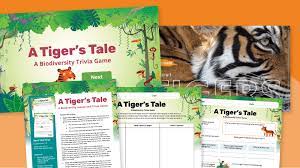
Your Students Will Love This Free Wild Tiger Lesson and Trivia Game

Introduction:

Educators are always on the lookout for creative and engaging ways to teach their students about various subjects, especially when it comes to wildlife conservation. The plight of wild tigers is one such subject that can spark your students’ interest, and now, a free wild tiger lesson and trivia game is here to make learning about these magnificent creatures more enjoyable than ever!

Get Ready for a Roaring Good Time:

Introducing the Free Wild Tiger Lesson and Trivia Game – an interactive and exciting experience specially designed for teachers who want to introduce their students to the world of wild tigers. Combining essential facts with entertaining trivia questions, this game not only educates but also captivates young minds.

Why Teach Students About Wild Tigers:

Wild tigers are an endangered species with their numbers drastically declining due to factors such as habitat loss, poaching, and human-tiger conflict. By educating students about these beautiful creatures, we can raise awareness and encourage the next generation to take action in the preservation and conservation of tigers.

A Sneak Peek into the Lesson:

The Wild Tiger Lesson covers a variety of topics that provide a comprehensive understanding of both the species and their current situation. Students will learn:

1. The biology of tigers: Dive into the world of tiger physiology, including their size, fur patterns, sensory abilities, and more.

2. Their habitat: Explore where tigers live in the wild – from tropical forests to grasslands.

3. Subspecies variations: Discover what differentiates the various subspecies of tigers found across Asia.

4. Threats facing tigers: Analyze why there has been a decline in tiger populations over recent years.

5. Conservation efforts: Understand how organizations worldwide are working towards preserving the remaining wild tiger populations.

The Trivia Challenge:

It’s time to put those newfound facts to the test with the Tiger Trivia Challenge. Consisting of multiple-choice questions, true or false statements, and picture identification rounds – the game is both entertaining and challenging. Your students will be thrilled to show off their knowledge while also discovering new and exciting facts.

Adaptable for Different Age Groups:

The best part about this free wild tiger lesson and trivia game is its flexibility. Teachers can easily adapt its content to suit the needs of children in various grade levels – from kindergarten to high school. This ensures that every student has an opportunity to appreciate and learn about the mighty wild tiger.

Conclusion:

Don’t miss out on this unique opportunity to bring excitement and fun into your classroom while simultaneously teaching your students an essential lesson in wildlife conservation. The Free Wild Tiger Lesson and Trivia Game will soon have your students roaring with enthusiasm as they learn about these awe-inspiring creatures and the crucial role they play in our world’s ecosystems. So, get ready to embark on a ferocious educational adventure that your students will cherish for a lifetime!

These Outrageous Parent Requests of Teachers Will Make Your Brain Explode

Introduction:

Being a teacher is no easy feat, especially when dealing with overbearing parents who seem to have unrealistic expectations or outrageous requests. Here are some eyebrow-raising parent requests that teachers had to deal with, making the education sector a whole new bag of challenges.

1. Can You Babysit My Child After School?

One parent had the audacity to ask a teacher if they would babysit their child after school hours. Not only is this request inappropriate, but it also disregards the boundaries between professional and personal life. Teachers are not babysitters, they are educators doing an important job.

2. Can You Adjust My Child’s Grade to an A?

Yes, you read that right! A parent once asked a teacher to change their child’s grade from a B+ to an A simply because they thought their child deserved better. Demanding such preferential treatment undermines the grading process and creates an unfair environment for other students.

3. Please Teach Only Vegetarian Food in Cooking Class

In a cooking class meant to expose children to different food cultures and ingredients, one parent requested that only vegetarian dishes be taught. While being conscious of dietary choices is vital, it is unreasonable to impose personal preferences on others in this manner.

4. Can My Child Skip Homework or Exams due to Extracurricular Activities?

Parents often want their children to engage in various activities beyond academics. However, asking for exemptions from homework or exams because of extracurricular engagements is asking too much from already overstretched teachers.

5. Contact Me Immediately if My Child Gets a Low Score

While concern for your child’s academic progress is understandable, demanding immediate contact for every minor blip puts undue stress on teachers. With so many students under their watch, this request can add unwarranted pressure on educators.

6. Allow Extra Screen Time During Class

In our increasingly digital world, screen time management has become a pressing concern for parents and educators alike. However, a parent asking a teacher to permit their child to have extended screen time during class hours for entertainment purposes is completely unreasonable.

Conclusion:

Teachers are entrusted with molding young minds into responsible adults. While parent involvement in education is essential, crossing boundaries with outlandish requests only impedes the learning process. By understanding and respecting the role teachers play in our children’s lives, we can foster healthier relationships and better educational experiences for everyone involved.

5 High-Impact, Low-Prep Activities for Creative Arts in Early Childhood

Introduction:

As educators and parents, our goal is to make the most out of every opportunity we have to stimulate a child’s development. Creative arts activities are an excellent way for young children to express themselves while also developing their cognitive and motor skills. Here are five high-impact, low-prep activities that you can easily implement in your early childhood classroom or at home to cultivate creativity and imagination.

1. Finger Painting:

There’s nothing more fun for a child than getting their hands messy with paint. Finger painting allows young kids to explore different colors, textures, and techniques without the need for brushes or other tools. Set up a space with non-toxic, washable paints, and large sheets of paper for them to create their masterpieces. They’ll learn about color mixing and develop fine motor skills as they play.

2. Dance/Movement Activities:

Dance and movement activities provide an opportunity for children to express themselves physically while developing their gross motor skills. Put on some kid-friendly music and encourage them to move their bodies freely. You can also incorporate fun props like scarves or ribbons if you wish. This activity can be done indoors or outdoors, making it versatile and adaptable to your space.

3. Clay or Play Dough Exploration:

Playing with clay or play dough is an excellent sensory experience that fosters creativity in young children. Provide various colors of clay or play dough for them to mold, shape, and create whatever they imagine. Add some simple tools like plastic knives, cookie-cutters, rolling pins, or even natural items like sticks and leaves for them to experiment with texture and design.

4. Collage Creation:

Collages allow children to explore different materials and textures while creating a unique piece of art. Provide an assortment of pre-cut paper shapes, fabric scraps, buttons, beads, sequins, yarn, and other items that can easily be glued onto paper. Encourage children to arrange the materials in interesting and creative ways, enhancing their skills in composition, pattern recognition, and design.

5. Music Station:

Music is an essential part of a child’s development, and allowing them to experiment with various instruments is highly beneficial. Set up a simple music station with items like tambourines, maracas, xylophones, or mini keyboards. Encourage children to make their own rhythms, melodies, or recreate songs they know. Experimenting with these instruments builds fine motor skills along with their understanding of pitch and rhythm.

Conclusion:

Creative arts activities are vital in early childhood development as they help children express themselves and enhance their cognitive growth. These five high-impact, low-prep activities are easy to set up and cater to various learning styles and interests, making them perfect additions to any early childhood environment. Let your child explore, create, and learn through art – the possibilities are endless!

High School Teachers Share Surprising Gaps in Students’ Knowledge

In recent years, high school teachers have identified numerous startling gaps in knowledge among their students. From basic historical facts to general life skills, educators are coming forward to discuss the surprising things their students don’t know. This not only raises concerns about the education system but also serves as a reminder of the need for ongoing discussions about how to improve curriculum and teaching methods.

Teachers across various subjects have reported a wide range of knowledge gaps in their students. In history classes, some students lack even fundamental details about our past. For example, many students struggle to place historical events on an accurate timeline, or they confuse important figures from different time periods. This deficit is especially concerning when students demonstrate limited awareness of major political events that continue to shape our world today.

In science and math classrooms, teachers note that plenty of students grapple with seemingly simple concepts. From understanding basic scientific processes to performing straightforward arithmetic without calculators, these teachers describe numerous situations where they are baffled by the lack of foundational knowledge in their classrooms.

It is not only academic knowledge that seems to elude today’s high schoolers, but also essential life skills such as cooking and financial management. Some teachers share surprising stories about teenage students’ struggles trying to understand where food comes from or how money works, raising concerns about their ability to become self-sufficient adults.

Several factors contribute to these knowledge gaps experienced by high school students. One possible explanation is that an ever-evolving education system has left many students attempting to catch up with shifting curriculums and learning standards. Additionally, classroom overcrowding and underfunded schools make it difficult for educators to give each student personalized support and attention.

Furthermore, advances in technology may be partly responsible for the deteriorating state of student knowledge. An increased reliance on smartphones and easily accessible information sources sometimes leads young people away from developing independent critical thinking and problem-solving skills.

To address these issues, schools must reconsider their curriculum and teaching methods. This may involve revisiting historical content to prioritize essential knowledge, integrating technology in ways that encourage deeper learning, and fostering a classroom environment that supports dynamic discussions and collaborative problem-solving. Meeting students where they are, without neglecting foundational concepts and life skills, will ultimately strengthen our future generations.

In conclusion, high school teachers are sharing significant and surprising gaps in knowledge among their students. Addressing these issues requires a rethinking of the curriculum as well as teaching strategies that accommodate diverse learners and promote critical thinking. By identifying and addressing these weaknesses, educators can empower students with the knowledge and skills necessary for personal growth and success in our rapidly changing world.

The Best Shoe Inserts for Teachers on Their Feet All Day

Teaching is an incredibly rewarding profession, but it can also be physically demanding. Teachers spend hours every day on their feet – walking around the classroom, standing at the whiteboard, and supervising students during breaks. Over time, this can take a toll on their feet and lead to discomfort or even serious health issues. One effective way to help alleviate foot pain and support overall foot health is through the use of shoe inserts. In this article, we will explore some of the best shoe inserts on the market designed specifically to address the needs of teachers who are on their feet all day.

1. Superfeet Green Insoles:

Superfeet Green Insoles are a popular option for teachers due to their durability, support, and comfortable design. These insoles offer a deep heel cup for optimal shock absorption, a high-density foam layer to cushion your footsteps, and a stabilizer cap that provides structure and support for the foam layer. Suitable for most footwear types, Superfeet Green Insoles are an excellent choice for educators looking to reduce foot fatigue and discomfort during long days in the classroom.

2. Dr. Scholl’s Work Gel Advanced Insoles:

Designed specifically for individuals who spend long hours standing or walking, Dr. Scholl’s Work Gel Advanced Insoles provide all-day comfort and arch support with their Massaging Gel technology. This technology helps to absorb shock from each step, reducing overall foot fatigue and minimizing pressure on joints and lower back. The reinforced arch support also ensures stability and proper alignment while standing or walking throughout the school day.

3. Powerstep Pinnacle Full-Length Orthotic Shoe Inserts:

Known for their effective arch support and dual-layer cushioning, Powerstep Pinnacle Full-Length Orthotic Shoe Inserts help improve overall foot comfort while alleviating pain caused by plantar fasciitis or flat feet. The firm yet flexible shell offers optimal support and corrects foot positioning, making these shoe inserts a strong choice for teachers seeking relief from daily foot strain.

4. SOLE Active Thick Footbeds:

If you’re looking for an environmentally-conscious option, SOLE Active Thick Footbeds are made of 100% recycled materials and designed to provide optimal support and cushioning. These inserts feature a deep heel cup, sturdy arch support, and a moisture-wicking top sheet to keep your feet dry and comfortable throughout the day. They can be heat-molded to match your specific foot shape, ensuring a customized fit.

5. Spenco Rx Comfort Insoles:

For teachers who prefer a thinner insole that still provides adequate support, Spenco Rx Comfort Insoles are an excellent choice. These lightweight inserts offer shock absorption through their durable cushioning system while providing arch support and stability. Additionally, their antimicrobial top cloth helps prevent blisters and control odor.

When selecting the right shoe insert for your needs, consider factors such as arch support, cushioning level, material quality, and overall fit with your specific footwear. Remember that it may take some time for your feet to adjust to new shoe inserts, so give them a break-in period before assessing their effectiveness fully. With the proper shoe inserts in place, teachers can enjoy more comfort while staying on their feet all day – contributing to better overall well-being at work and beyond.

Help! I Have a Parent Screaming and Making Faces on Zoom. What Should I Do?

As emerging technology has significantly blurred the lines between personal and professional lives, we are now facing unprecedented challenges that continue to affect our daily virtual routines. A prime example of this would be how to handle uncomfortable situations on video meetings, like a parent making a scene in the background while you’re on a Zoom call. Here are some tips on how to gracefully manage such a delicate situation without compromising your workplace reliability.

1. Keep Calm and Carry On

The first rule of thumb for handling any unexpected situation is to stay calm, even if your parent is causing a disturbance while you’re trying to concentrate on an important call. Showing embarrassment or agitation will only exacerbate the situation and draw more attention to it. Instead, maintain your composure and remain focused on the topic being discussed.

2. Mute Your Microphone

To minimize any disruption caused by a noisy background, promptly mute your microphone when not speaking. This simple act will help prevent background noise (like your parent’s shouting) from reaching your colleagues, ensuring that the meeting proceeds smoothly.

3. Use Background Blur or Virtual Background

By using video software tools like background blur or virtual backgrounds, you can effectively hide a nosy parent from view. This useful feature available in Zoom or Teams allows you to replace or obscure your backdrop with images or patterns that keep focus solely on you.

3. Address the Situation Offline

Immediately after the meeting, have an honest yet respectful conversation with your parent about their behavior. Explain that their actions were disruptive and impacted both your performance and professional image during the video conference. Ultimately, try to establish ground rules for when you’re working from home in an effort to avoid similar episodes in the future.

4. Speak with Your Supervisor

If incidents like these become recurrent problems that affect your work performance or professional relationships, consider discussing it with your supervisor. Remember to approach the topic calmly and professionally, address the steps you’ve taken to solve the issue, and request any further guidance.

5. Adjust Your Home Workspace

Lastly, consider adjusting your home workspace to minimize distractions. Look for potentially quieter, private spaces in your home that reduce the likelihood of nosy parents interrupting your meetings. It might also help to invest in noise-canceling headphones or a better-quality microphone to guarantee a more professional audio output during calls.

In conclusion, handling an unruly parent during a Zoom meeting is undeniably difficult, but it doesn’t have to spell disaster for your professional reputation. By staying calm, following these practical strategies, and initiating understanding communication with both your parent and your employer, you’ll be able to smoothly navigate similar situations down the line, maintaining a positive work-at-home experience.

Checklist: Everything You Need to Outfit Your Music Room

A well-equipped music room can make all the difference when it comes to practicing, composing, and performing. It’s essential to create a space that encourages creativity, productivity, and enjoyment. Here is a checklist of everything you need to outfit your music room for an enhanced musical experience.

1. Musical Instruments

– Acoustic or electric guitars

– Piano or keyboard

– Drum set or electronic drum kit

– Microphone and stand

– Audio interface for recording

– Synthesizers and MIDI controllers

2. Furniture and Space Set-up

– Comfortable seating (chairs, couches, etc.)

– Music stands for sheet music

– Adjustable stool for pianos/keyboards

– Storage for instruments and equipment (cabinets, shelves, wall mounts)

– Desk or table for workstations and mixing stations

3. Lighting and Ambience

– Adequate natural light or adjustable lamps

– Ambient lighting to create mood/atmosphere (RGB LED lights)

– Window treatments for sound insulation and light control

4. Soundproofing Materials

– Acoustic foam panels or bass traps

– Door weatherstripping for sound insulation

– Heavy curtains or drapes to reduce echo

5. Audio Equipment

– Studio monitors or speakers

– Headphones for monitoring or practice

– Audio cables (XLR, 1/4 inch, etc.)

– Power strips/surge protectors

6. Recording Devices and Software

– Digital Audio Workstation (DAW) software

– Audio interfaces (USB, Thunderbolt)

– Large diaphragm condenser microphones

7. Accessories and Extras

– Guitar picks, straps, capos

– Extra drum sticks or brushes

– Spare instrument strings

– Tuners or metronomes

8. Decorative Elements

– Posters, wall art or tapestries featuring musical themes

– Framed album covers or sheet music

– Music-themed rugs or floor mats

Take your time setting up your music room to ensure it’s functional and inspiring. With all the essential components in place, you’ll be well on your way to creating a space that nurtures creativity and allows for endless hours of musical exploration.

Books to Read With Kids After a Tragedy

Introduction

Experiencing a tragedy can be challenging for people of all ages, but it can be especially difficult for children who may not fully understand the complexities of the situation. One of the best ways to help them process their feelings and emotions is through reading books that address such topics. Here are some excellent books to read with your kids after experiencing a tragedy.

1. The Invisible String by Patrice Karst

This heartwarming story helps children understand that they’re always connected to the people they love, even when they’re not physically present. It’s an excellent book for helping kids cope with separation and loss.

2. The Memory Box: A Book About Grief by Joanna Rowland

The Memory Box is a touching book about a girl who creates a memory box to help her remember her beloved grandmother. The book provides a meaningful way for children to think about their own memories and experiences of loss.

3. Healing Days: A Guide For Kids Who Have Experienced Trauma by Susan Farber Straus

This interactive workbook is designed to help children who have experienced trauma better understand their feelings and emotions. The book can be read together with a parent or therapist, and it includes many activities to engage kids in the healing process.

4. A Terrible Thing Happened by Margaret M. Holmes

This book is an ideal choice for helping young children cope with trauma in age-appropriate ways. The story follows Sherman, a raccoon who has witnessed something terrible, as he learns how to deal with his confusing emotions and fears.

5. When Dinosaurs Die: A Guide to Understanding Death by Laurie Krasny Brown and Marc Brown

Using relatable dinosaur characters, this picture book helps kids understand death in simple and accessible terms. Although the situations discussed are fanciful, the message remains poignant for those experiencing loss.

6. When Something Terrible Happens: Children’s Grief Workbook by Marge Eaton Heegaard

By providing children with a creative outlet to express their emotions, this workbook offers a healthy way to cope with traumatic events. The book includes drawing activities and insightful prompts that encourage reflection on the grieving process.

Conclusion

In times of tragedy, it’s vital to acknowledge and address the emotions of children. Utilizing these insightful books will help guide your kids through the healing process by providing age-appropriate tools, language, and resources. By reading together and discussing the themes within these books, you can offer your child comfort, understanding, and hope for brighter days ahead.

The End of the Year Is Rough, But More Screen Time Isn’t the Answer

As the year draws to a close, we often find ourselves facing increased pressures at work, school, and home. It is not unusual to feel overwhelmed and exhausted during this busy time. In an attempt to unwind and find some relief from the chaos, you might be tempted to turn to screens for solace. However, more screen time may not be the answer we’re searching for.

The Side Effects of Increased Screen Time

While it can be easy to lose yourself in a digital world, whether scrolling through social media feeds or binge-watching a new series on a streaming service, increased screen time has its consequences. Studies have shown that excessive screen time can lead to increased stress levels, insomnia, and feelings of loneliness and depression.

Physical health concerns are also associated with increased screen time. Prolonged sitting and hunching over devices can contribute to a sedentary lifestyle which may result in obesity and other health issues such as heart disease and diabetes.

How To Manage Screen Time During the End of the Year

It might seem counterintuitive in our increasingly digital world, but cutting back on screen time can have profound benefits for our mental and physical wellbeing. Here’s how you can manage your screen usage during these trying times:

1. Set limits: Establish clear boundaries for screen usage by allocating certain times or durations for leisurely browsing or watching shows. Creating guidelines will help prevent mindless scrolling and ensure productive use of your time.

2. Prioritize sleep: Establishing a screen-free bedtime routine can lead to better sleep quality. Disconnect from electronic devices an hour before bedtime, as exposure to blue light emitted by screens can suppress melatonin production and interfere with your circadian rhythm.

3. Engage in physical activity: Incorporate daily exercise into your routine – not only will it help counteract the negative effects of a sedentary lifestyle, but physical activity has also been proven to reduce stress and improve mood.

4. Seek alternative relaxation techniques: Instead of turning to screens as a form of relaxation, try other methods such as meditation and deep breathing exercises, reading a book, participating in a creative hobby or spending time with loved ones.

5. Use tech mindfully: Embrace technology that promotes a healthy balance, such as apps that track screen usage or remind you to take breaks and stretch throughout the day.

The end of the year can indeed be rough, but it’s essential to remember that more screen time is not necessarily the answer to alleviate stress. By managing our screen usage and seeking alternative forms of relaxation, we can promote better mental and physical wellbeing as we face the challenges of this busy period.

Top Autism Resources for Teachers: Books, Strategies, Courses, and More

As educators, it’s essential to adapt our teaching styles and strategies to accommodate students with various learning needs. When catering to children with autism, it’s important to have access to a variety of resources that cater to their unique needs. In this article, we will be exploring the top autism resources for teachers, including books, strategies, courses, and more.

Books:

1. “Ten Things Every Child with Autism Wishes You Knew” by Ellen Notbohm: This book offers valuable insights into the inner world of children with autism, written by a mother of a child on the spectrum.

2. “The Autism Checklist: A Practical Reference for Parents and Teachers” by Paula Kluth: This resource offers tools and techniques to help parents and educators create inclusive learning environments for children with autism.

3. “Uniquely Human: A Different Way of Seeing Autism” by Barry M. Prizant: The author focuses on understanding the autistic experience from within and building positive relationships with students on the spectrum.

Strategies:

1. Visual supports: Use visual schedules and social stories to help students with autism understand routines and expectations in school settings.

2. Sensory breaks: Implement sensory breaks throughout the day for students who may become overwhelmed in noisy or crowded environments.

3. Differentiate instruction: Offer multiple ways to learn a concept or skill, including hands-on activities, interactive games, and assistive technology resources that accommodate diverse learning styles.

Courses:

1. Teaching Students with Autism Spectrum Disorder (ASD), a course offered by the Geneva Centre forAutism: This online module provides educators with an understanding of ASD characteristics and how they affect learning in the classroom.

2. Autism Internet Modules (AIM): AIM offers free online professional development courses covering various topics related to teaching students with ASD.

3. Understanding Autism Spectrum Disorder: Coursera offers this online course in collaboration with the University of California, San Francisco, providing useful insights into autism and strategies for supporting students with ASD.

More Resources:

1. The National Autism Association: This organization offers resources and support to both educators and parents of children with autism.

2. Autism Speaks: With a wealth of resources, this organization focuses on promoting solutions for individuals with autism across the lifespan.

3. The Autism Society: Teachers can access useful articles, webinars, and other information through this national organization that advocates for individuals on the spectrum.

In conclusion, understanding the specific needs of students with autism and adjusting our teaching methods to accommodate those needs is crucial to their success in the classroom. By utilizing these top autism resources, including books, strategies, courses, and additional support networks, teachers can create more inclusive learning environments that help promote each student’s growth and development.

What Is Service Learning and How Is It Done?

Introduction

Service learning is an innovative educational approach that combines academic learning with volunteerism and community service. This approach enables students to deepen their knowledge, develop new skills, and actively engage with the society they belong to. Service learning allows students to grow personally, academically, and professionally while making valuable contributions to their communities. In this article, we will delve into the concept of service learning and discuss how it is carried out in educational settings.

What is Service Learning?

Service learning is a method that integrates community service within a traditional academic course or program. The main goal of this approach is to enhance the student’s learning experience by engaging them in activities that address real-world issues and needs. By working directly with local organizations or individuals in need, students can apply their classroom knowledge in practical situations. This helps them gain essential life skills such as problem-solving, critical thinking, communication, team building, and more.

How Is Service Learning Done?

Here are the general steps involved in implementing a service-learning project:

1. Identify Community Needs: First and foremost, educators need to collaborate with local communities or organizations to identify the needs or issues that students can help address through service learning.

2. Develop Relevant Projects: Service-learning projects should be designed to complement existing academic curricula and promote a deeper understanding of the subject matter. Teachers should work closely with community partners to create projects that are meaningful and mutually beneficial.

3. Reflect on Experiences: Reflection is a crucial component of service learning. Students should be encouraged to discuss their experiences, analyze the impact of their work on the community, and evaluate how their involvement contributed to their personal growth.

4. Focus on Reciprocity: Service-learning experiences should be mutually beneficial for both students and the communities they serve. Effective projects create opportunities for students to learn from community members while providing valuable services or support.

5. Assess Outcomes: Assessing the outcomes of service-learning projects is essential to determine their effectiveness and make improvements for future initiatives. Teachers should gather feedback from students, community partners, and other stakeholders involved in the project on a regular basis.

Conclusion

Service learning is an immersive educational approach that combines academic learning with meaningful community engagement. By participating in real-world projects, students can hone their skills, broaden their perspectives, and gain a sense of civic responsibility. Schools that adopt this approach can better prepare their students for the challenges of navigating today’s complex world while fostering positive change in their communities.

Latest Posts